
• Products
    • Options Screener
    • Copy Trading
    • Roll Assistant
    • QW Intelligence
    • Options Journal
    • GEX Dashboard
    • Gamma FlowsSoon
    • AI Research AgentsSoon
    • All Products
  • Free Course
  • Resources
    • How-to guides
    • Compare
    • Release notes
    • Roadmap
  • Tools
    • Wheel Strategy Calculator
    • GEX Calculator
    • GEX Heatmap
    • Max Pain
    • Earnings Scanner
    • Optimal Roll
    • Options Calculator
    • Cash-Secured Put Calculator
    • Cost Basis Calculator
    • Strategy Explorer
  • Login
  • Sign up
GitHub
QuantWheelQuantWheel
Options
Options Screener

Real-time scanner for sellers & buyers

Copy Trading

Follow alerts from top traders

Roll Assistant

Optimal roll to avoid assignment

Intelligence
QW Intelligence

AI that understands your portfolio

Options Journal

Auto-sync P&L, chains & calendar

GEX
GEX Dashboard

Gamma, Vanna, Charm analysis

Gamma FlowsSoon

Real-time flow alerts

More
AI Research AgentsSoon

Portfolio monitoring & idea generation

All Products

Every QuantWheel tool in one place

Free Course
How-to guides

Step-by-step walk-throughs

Compare

QuantWheel vs other tools

Release notes

Latest features & improvements

Roadmap

What we’re building next

Wheel Strategy Calculator

Full wheel premium & break-even

GEX Calculator

Free gamma exposure calculator

GEX Heatmap

Strike-level gamma heatmap

Max Pain

Options max pain by expiration

Earnings Scanner

Mispriced earnings expected move

Optimal Roll

Free roll opportunity finder

Options Calculator

P&L, Greeks & probability

Cash-Secured Put Calculator

Premium, break-even & cash required

Cost Basis Calculator

Real cost basis after assignment

Strategy Explorer

Visualize multi-leg strategies

Beginner
  • What Are Options
  • How Options Work
  • Options Pricing
    • Intrinsic vs extrinsic value
    • How are options priced?
    • What is the bid-ask spread?
    • What is implied volatility IV?
  • About Assignment
Intermediate
  • Covered Calls
  • Cash Secured Puts
  • The Wheel
Advanced
  • Greeks
  • Rolling Options
  • Risk Management
Resources
  • Trading Psychology
  • Helpful Tools
  1. Learn
  2. Options Pricing

Options Pricing

Learn why options cost what they do and how their value changes based on price movement, time decay, and implied volatility shifts.
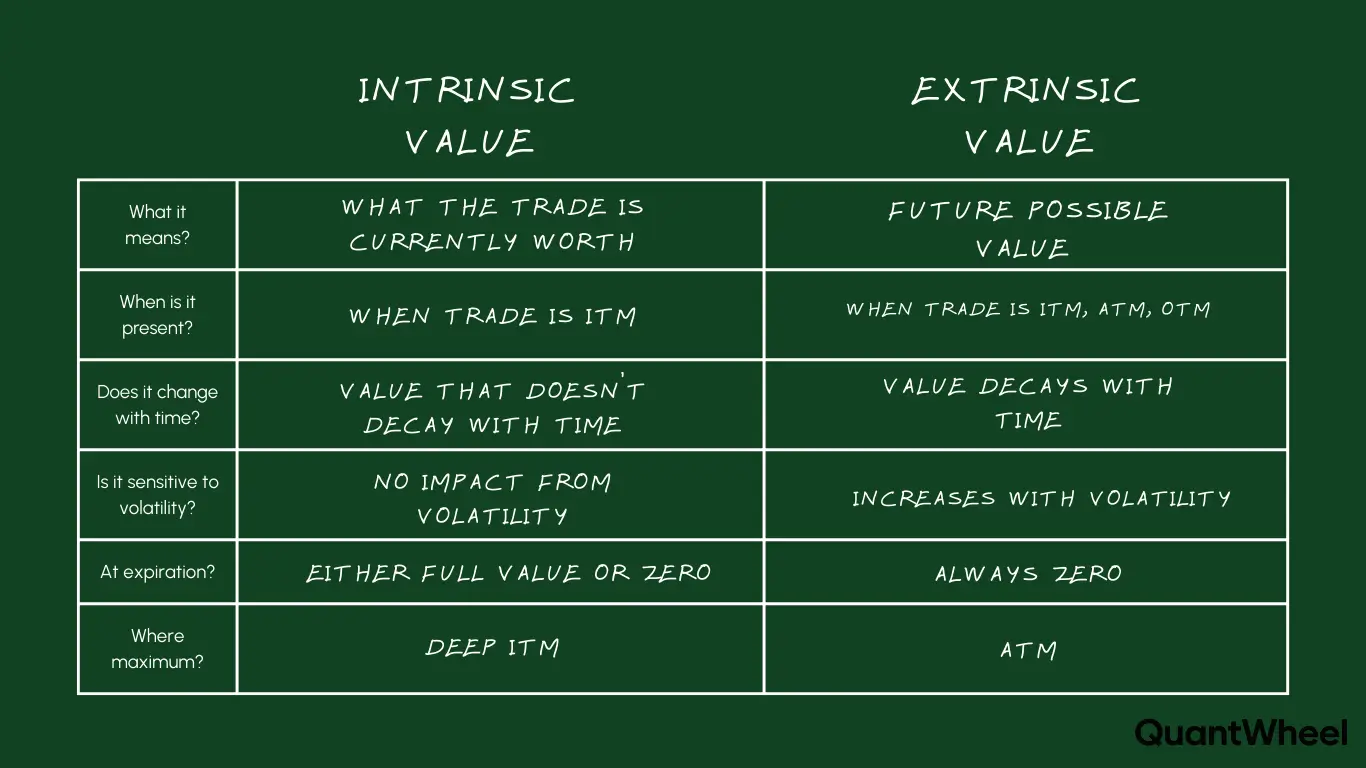
  1. A detailed table displaying intrinsic value and extrinsic value components of option premium, explaining what is options premium and how does options premium work when trading options.This breakdown shows how to pick strike price by analyzing strike price levels for intrinsic profit potential versus time decay premium. Intrinsic value indicates when sellers get assigned because deep ITM strike price contracts force assignment. Understanding extrinsic value helps avoid got assigned scenarios by selecting strikes where assignment probability remains low while maximizing time premium collection.Intrinsic vs Extrinsic Value: Understanding Option Premium ComponentsLast updated: February 17, 2026
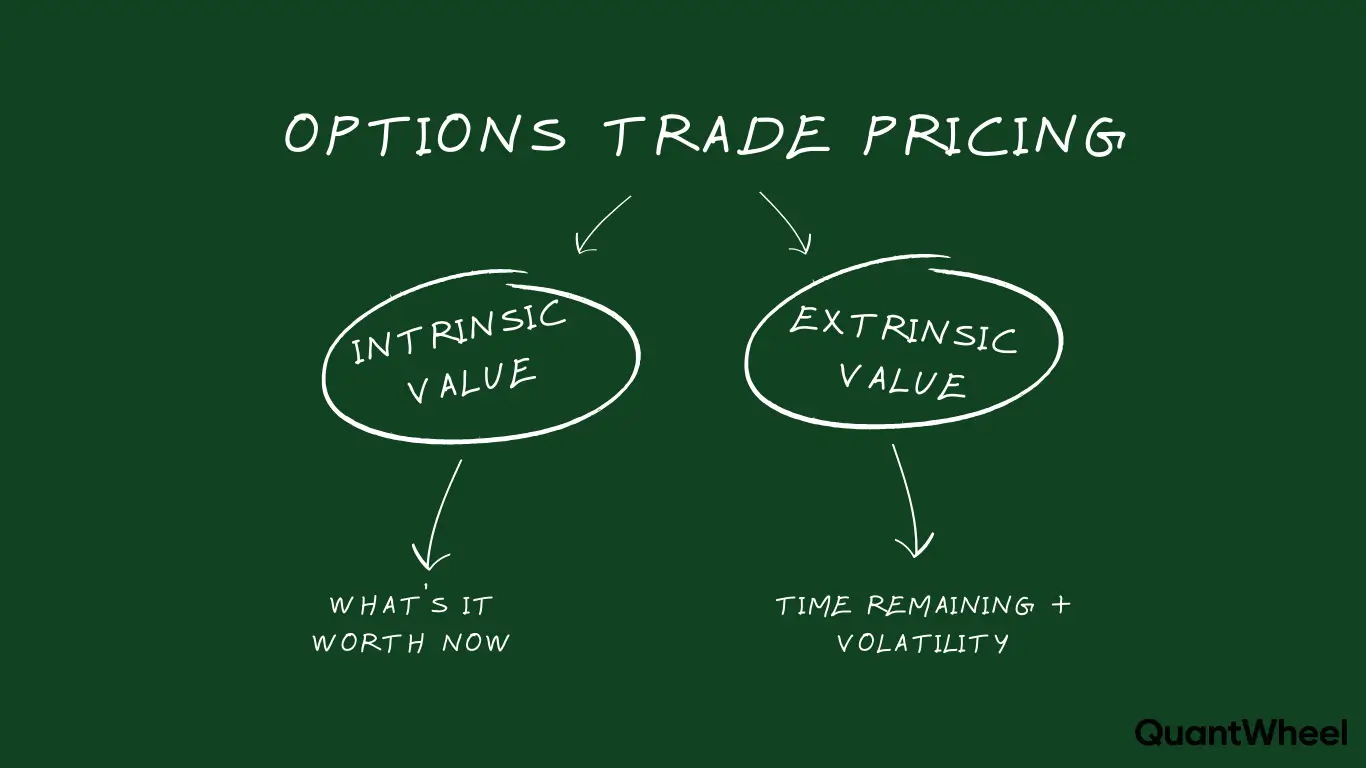
  2. Intrinsic value and extrinsic value are the two core components that determine any option's premium, and this simplified diagram provides a clear example of how it works in real trading scenarios. When learning the intrinsic extrinsic difference, traders discover that intrinsic value represents immediate, tangible profit available if an option were exercised right now, existing only when contracts are in-the-money. Conversely, extrinsic value captures the time remaining until expiration plus market volatility expectations, affecting every option regardless of moneyness. Understanding intrinsic vs extrinsic value is essential because extrinsic value decays as expiration approaches while intrinsic value fluctuates with the underlying asset's price movements. This visual breakdown simplified the complex pricing model, showing how it works when combining both factors to calculate fair premiums across different strike prices and expiration dates.Options Pricing: Understanding How Options Are PricedLast updated: February 13, 2026
  3. This detailed image illustrates the fundamental concept of the bid ask spread, which represents the critical difference between the bid price and the ask price in financial markets, demonstrating how buyers and sellers interact within the trading environment to execute transactions involving various securities and financial instruments across different exchanges. The visual representation emphasizes how the bid represents the highest price that a buyer is willing to pay for a particular asset or security in the market, while the ask price indicates the lowest price at which a seller is prepared to accept an offer, creating a measurable gap that traders and investors must navigate during execution of their orders. This bid ask spread serves as a fundamental indicator of market liquidity, where narrow spreads typically signal high liquidity with numerous active participants and competitive pricing, while wide spreads often indicate lower liquidity, increased volatility, or higher perceived risk in the market for that particular instrument. Understanding this spread is essential for traders because it directly impacts transaction cost and potential profit or loss, as the difference between buying at the ask and selling at the bid represents an immediate cost that must be overcome before achieving profitability. The image effectively conveys how market makers and brokers facilitate trading by providing both bid and ask quotes, earning the spread as compensation for maintaining market liquidity and managing inventory risk. Additionally, the visualization helps traders understand order depth and how the spread can widen during periods of increased volatility or thin market conditions, affecting execution quality and overall trading performance across various asset classes including stocks, forex, and other securities traded on organized exchanges.Options Bid Ask Spread: Understanding Liquidity and Trading CostsLast updated: February 17, 2026
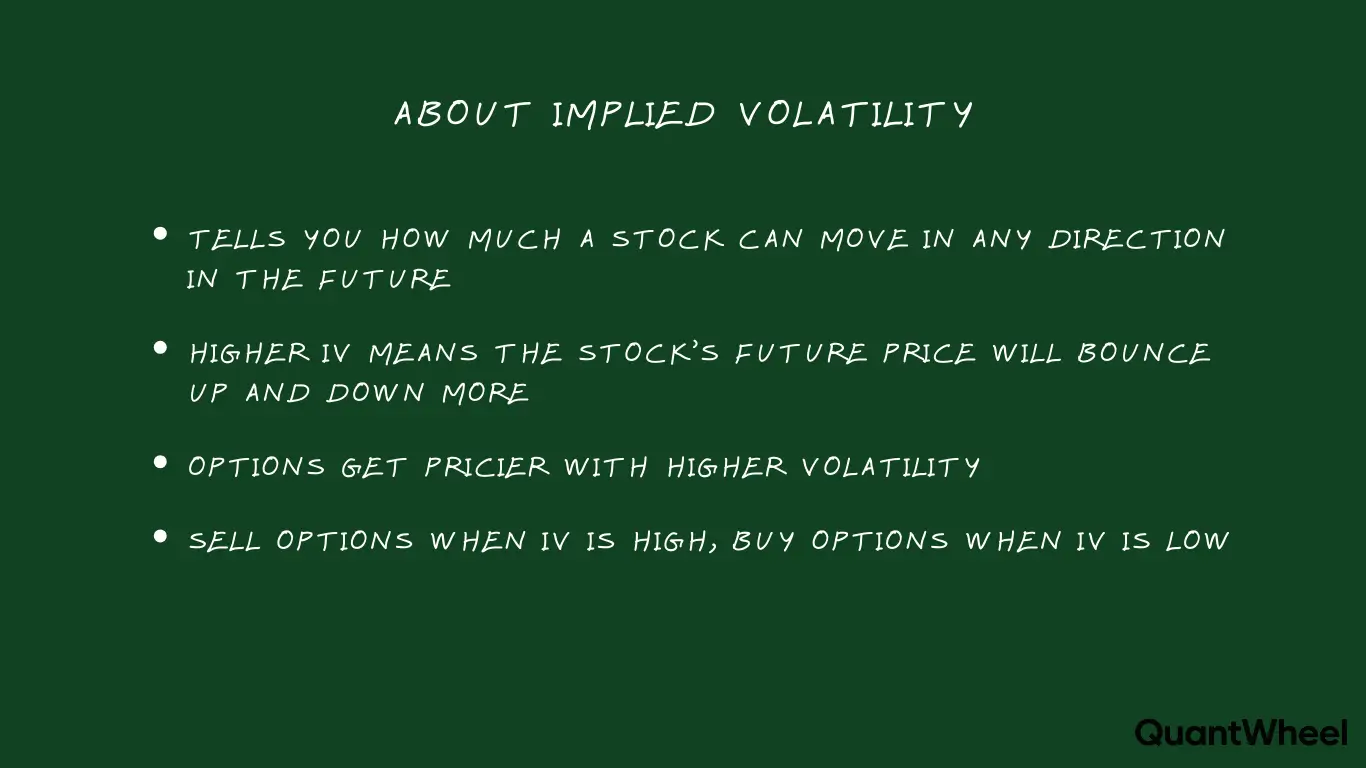
  4. A visual guide explaining what is implied volatility and how volatility impacts options premium, illustrating what is option premium and how does option premium work when trading options. The image demonstrates how volatility impacts options premium by showing elevated implied volatility increases option premium costs for buyers while benefiting options sellers receiving higher option premium. Traders observe that implied volatility represents market expectations of future price swings, directly affecting extrinsic value within total option premium. Understanding what is implied volatility helps options traders time entries when implied volatility is low and option premium is cheaper, or sell when implied volatility is high and option premium is expensive. This analysis of how volatility impacts options premium enables better options trading decisions by predicting option premium fluctuations based on implied volatility changes.Implied Volatility: Improve Trade Timing and SelectionLast updated: March 27, 2026
Company
  • About
  • Pricing
  • Documentation
  • Webinars
  • Terms
  • Privacy
  • Refund Policy
Products
  • All Products
  • QW Intelligence (AI)
  • Options Journal
  • Copy Trading
  • Selling Screener
  • Buying Screener
  • Roll Assistant
GEX Analytics
  • GEX Dashboard
  • Gamma Flows
  • Gamma Exposure
  • Vanna & Charm
  • GEX Calculator
  • GEX Heatmap
  • Max Pain Calculator
Free Tools
  • GEX Calculator
  • GEX Heatmap
  • Max Pain Calculator
  • Earnings Expected Move Scanner
  • Optimal Roll
  • Options Calculator
  • Cash-Secured Put Calculator
  • Cost Basis After Assignment
  • Strategy Explorer
Coming Soon
  • AI Research Agents
  • Gamma Flows
Copyright QuantWheel, Inc © 2026. All rights reserved.