Free tool
Cash-Secured Put Calculator
See your premium, your break-even, and the cash you set aside before you sell the put. And see exactly what happens if you get assigned. Free, no signup.
Educational tool, not investment advice. The figures are math from the numbers you enter, not a projection or an offer.
The put you sell
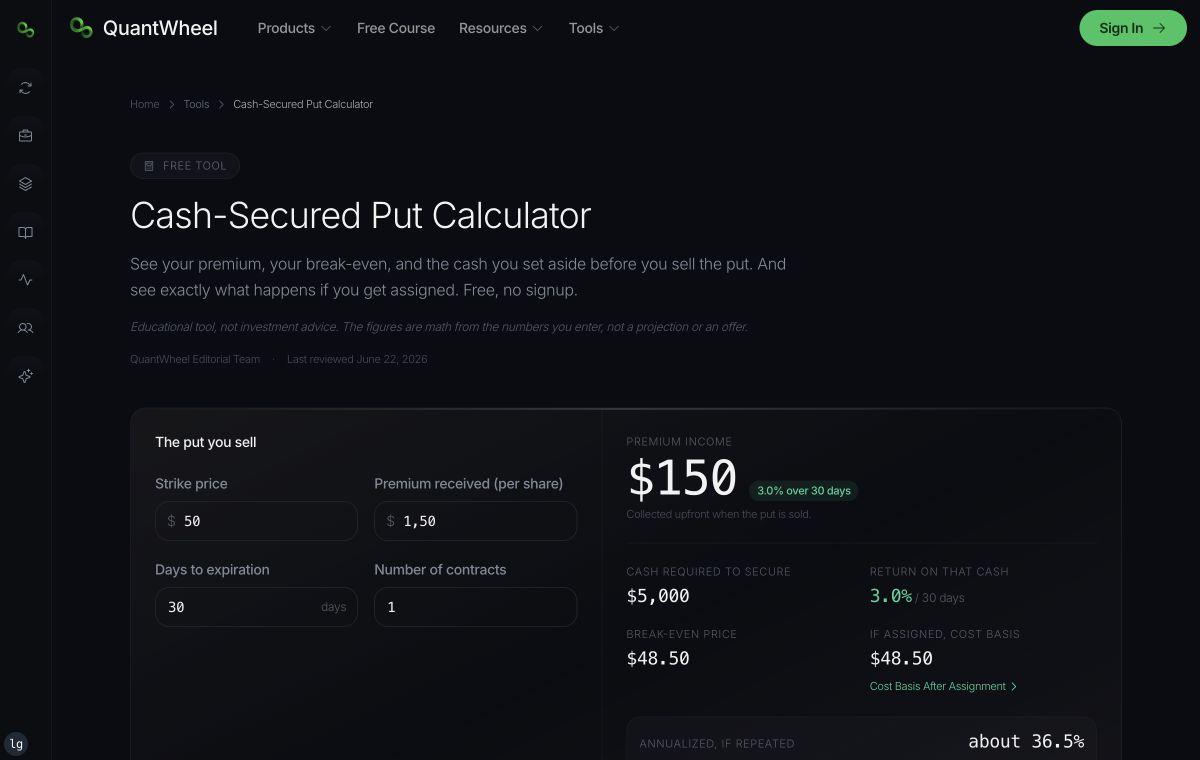
Premium income
Collected upfront when the put is sold.
- Cash required to secure
- $5,000
- Return on that cash
- 3.0% / 30 days
- Break-even price
- $48.50
Illustrative only. Markets do not promise a repeat.
If the stock falls below your strike, you buy it anyway, and it can be worth less than your break-even of $48.50.
What is a cash-secured put?
A cash-secured put is when you sell a put option and set aside enough cash to buy 100 shares per contract at the strike, in case you are assigned. You collect a premium upfront. If the stock stays above the strike, the put expires worthless and you keep the premium. If it falls below, you buy the shares at the strike, minus the premium you already collected.
It is the first step of the wheel and a common way to enter a stock you want to own at a lower effective price. The calculator above shows your premium, your break-even, and the cash you need, before you place the trade.
How to calculate cash-secured put returns
- Enter the strike of the put you are selling.
- Enter the premium you receive, per share.
- Enter the days to expiration.
- Read the premium, the cash required, the break-even, and the return on that cash.
Return on capital is the premium divided by the cash you secure, which is the strike times 100. Your break-even, and your cost basis if assigned, is the strike minus the premium.
What return should you expect, and the risk nobody mentions
A cash-secured put looks like easy income when the stock cooperates. The risk shows up when it does not. If the stock drops well below your strike, you still buy it at the strike. The premium softens the hit, but you can end up holding shares worth less than you paid, with your cash tied up the whole time.
That is the trade. You take limited upside, the premium, in exchange for the obligation to buy. So sell puts only on stocks you would be glad to own, at strikes where the effective purchase price makes sense to you. A very high annualized yield usually points to a stock the market expects to swing hard, which is more risk, not a free lunch. The Options Clearing Corporation publishes the Options Disclosure Document, which covers these risks in full.
What happens if your put is assigned?
Assignment is not a failure. In the wheel it is part of the plan. If your put is assigned, you buy 100 shares per contract at the strike, and your real cost basis is the strike minus the premium you collected. From there you sell covered calls against the shares to keep collecting premium.
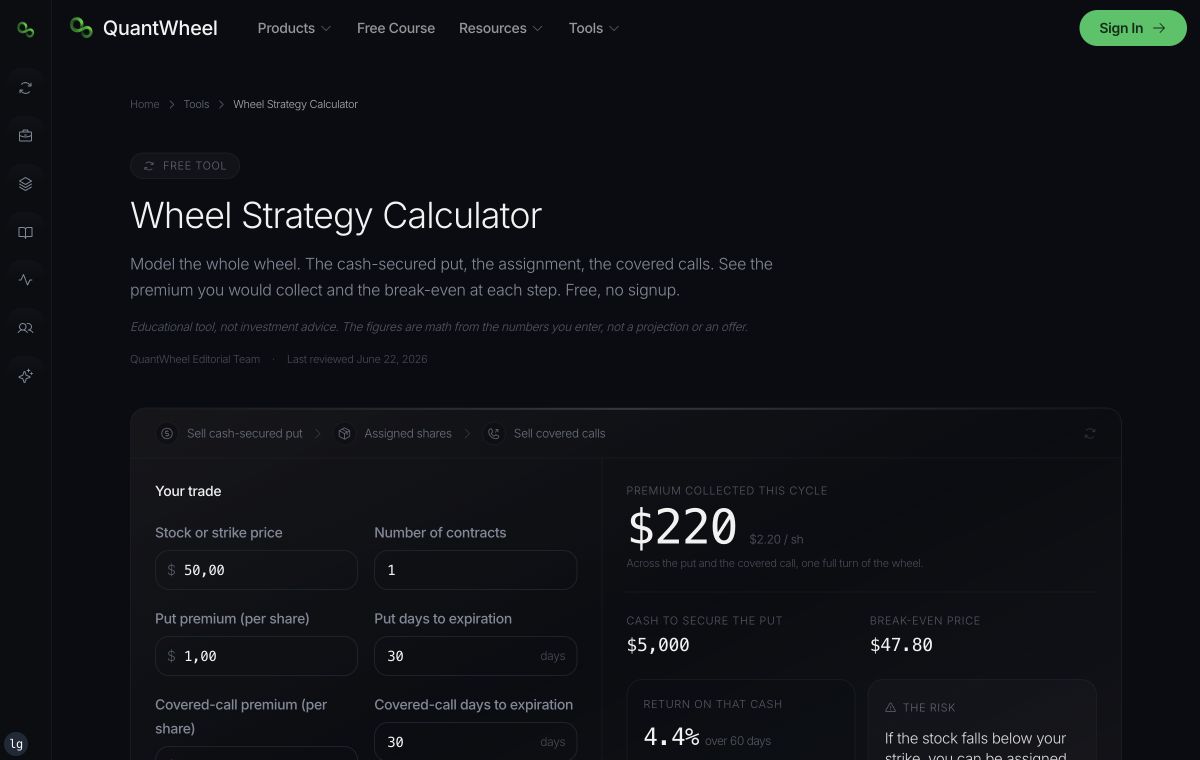
For the exact figure, use the Cost Basis After Assignment Calculator. To model the whole income cycle of put, assignment, and covered calls, use the Wheel Strategy Calculator.
Worked example, one cash-secured put
One contract on a 50 dollar stock.
- Sell the 50 put, 30 days out, collect 1.50. That is 150 dollars.
- Set aside 5,000 in cash to secure it.
- If the stock stays above 50, the put expires worthless and you keep the 150.
- If it falls below 50, you buy 100 shares. Your break-even and cost basis are 48.50.
Frequently asked questions
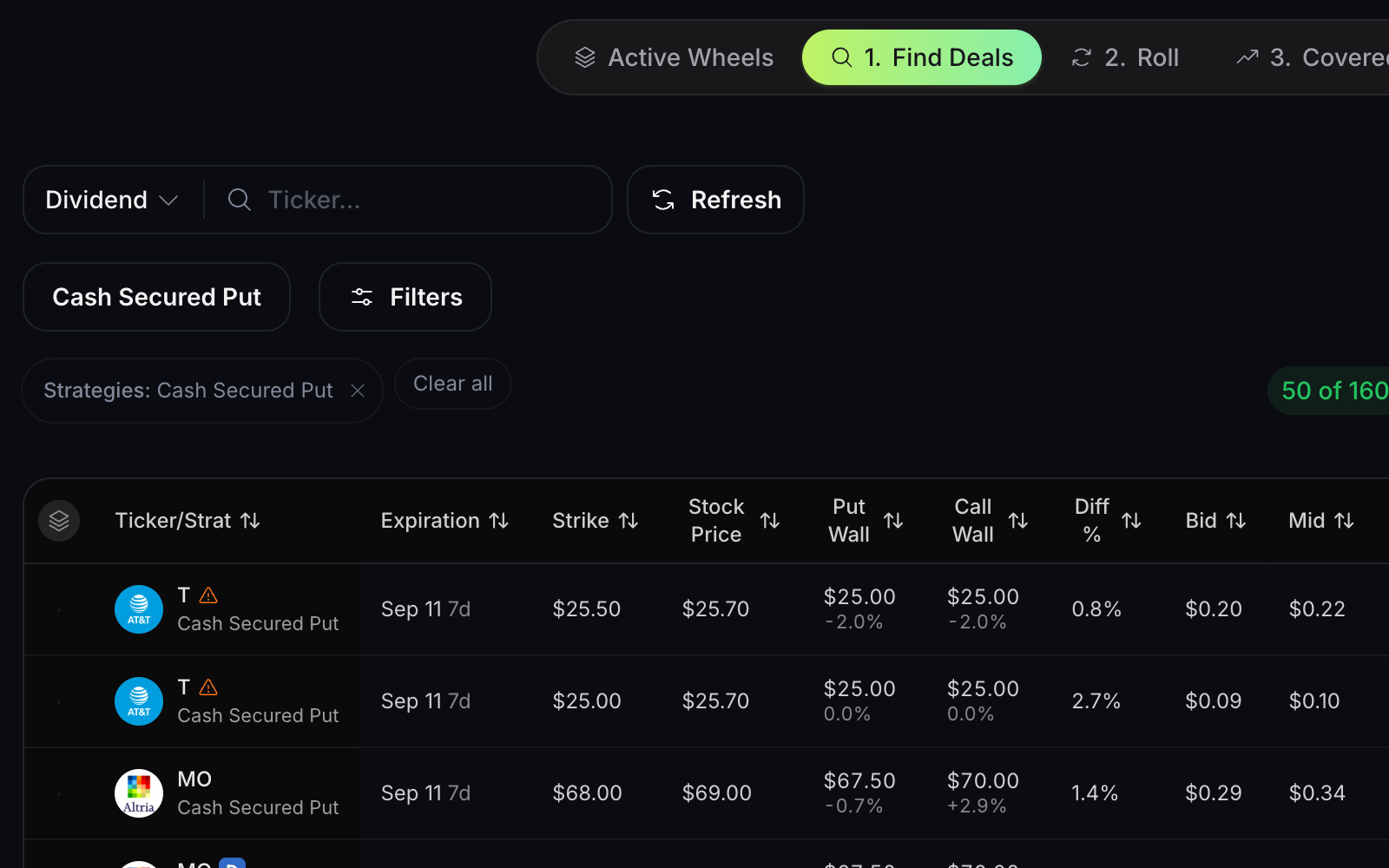
Once you have sold one put, the next question is which put to sell next. Guessing strikes inside your broker, scrolling the option chain and picking one that looks fine, is how most people do it. QuantWheel's seller screener ranks cash-secured puts across the market by yield and risk, filtered to your rules. If you get assigned, it tracks your real cost basis and surfaces covered-call opportunities automatically. Your portfolio, your broker.
Related free tools: Wheel Strategy Calculator, Cost Basis After Assignment Calculator, Optimal Roll.
Options trading involves substantial risk and is not suitable for all investors. Selling cash-secured puts can result in being assigned shares that have fallen in value. Before trading options, you should read the Options Disclosure Document available from the Options Clearing Corporation. Past performance does not guarantee future results. The figures in this tool are illustrative calculations from the inputs you provide. They are not a projection, an expected return, or an offer. This tool is for educational purposes only and is not investment advice. Consult a licensed professional for advice specific to your situation.
Next step
Where to go next
Try the whole product with sample positions. No account needed.
$1 for 7 days • Cancel anytime • 14-day money-back guarantee