
If you're confused by terms like "calls," "puts," "strike prices," and "premiums," you're not alone. Options trading has a reputation for being complicated, but the core concept is actually straightforward once you understand the basics.
$1 for 7 days • Cancel anytime • 14-day money-back guarantee
This guide breaks down everything you need to know about options, from the basic definition to how they work in real trading situations. By the end, you'll understand exactly what options are, how they differ from stocks, and whether they fit your trading goals.
Let's get into it.
Options are financial contracts that give you the right, but not the obligation, to buy or sell a stock at a specific price within a certain time period. Think of it like a reservation at a restaurant: you pay a small fee to hold a table, but if you decide not to go, you're not forced to show up - you just lose your reservation fee.
Here's a simple example: Imagine Apple stock is trading at $150, and you think it will go up. You could buy a call option that gives you the right to buy Apple at $155 anytime in the next 30 days, and you pay $3 per share ($300 total for the contract). If Apple jumps to $170, you can buy it at $155 and immediately profit. If Apple stays at $150 or drops, you simply let the option expire and only lose the $300 you paid.
- Options are like tickets that give you a choice to buy or sell a stock
- You pay a small price upfront (called premium) for this choice
- You're never forced to use your option - you can let it expire
- Each option contract controls 100 shares of stock
- Options have an expiration date - they don't last forever
- Your maximum loss as a buyer is what you paid for the option
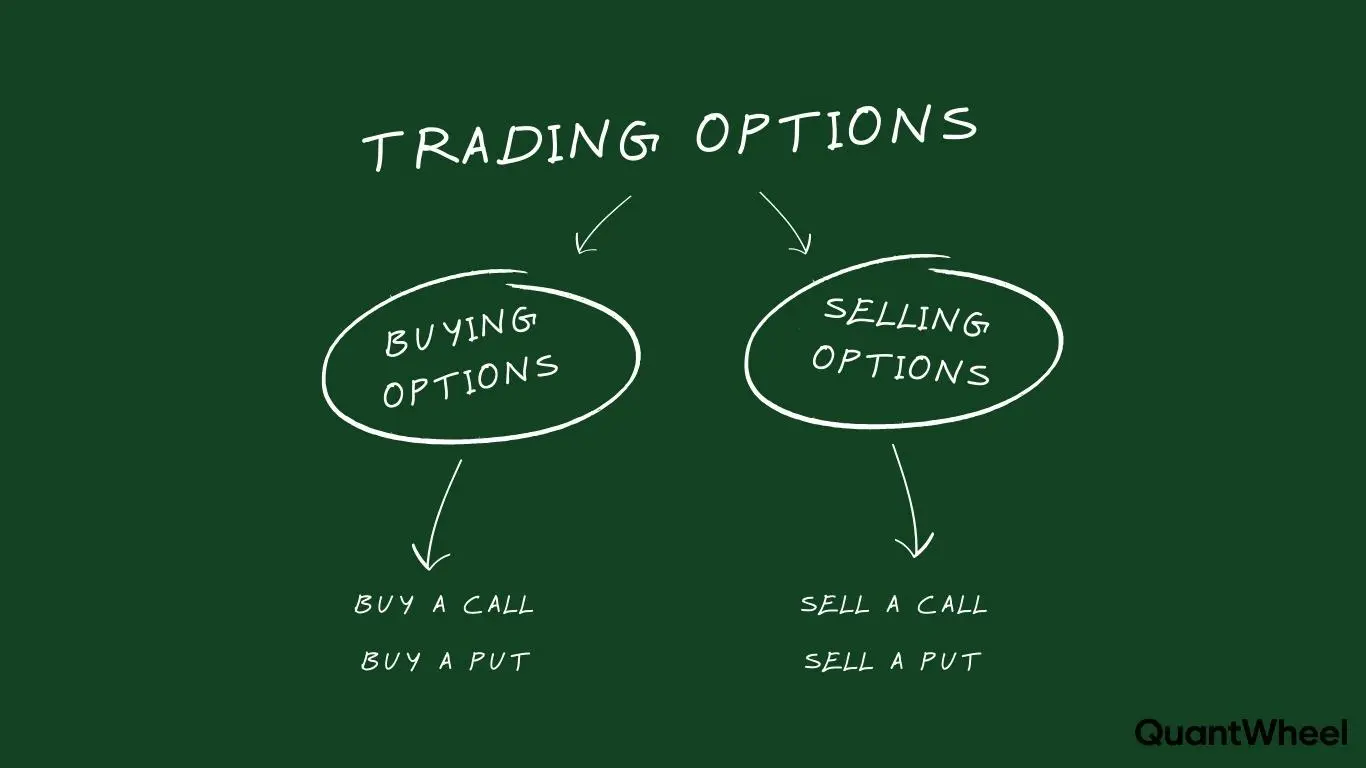
Congratz, now you know how buying a call works. Buying a put would be just the other way around.
Understanding the Core Options Definition
At its heart, an option is a derivative contract - meaning its value derives from an underlying asset, typically a stock. The formal definition of options includes several key components that work together to create the contract's terms.
The Two Types of Options
Options come in exactly two varieties, and understanding this distinction is crucial:
Call Options grant the holder the right to buy the underlying stock at the strike price. Traders buy calls when they believe the stock price will rise above the strike price before expiration. The seller (or "writer") of the call has the obligation to sell the stock at the strike price if the buyer exercises the option.
Put Options grant the holder the right to sell the underlying stock at the strike price. Traders buy puts when they believe the stock price will fall below the strike price before expiration. The seller of the put has the obligation to buy the stock at the strike price if the buyer exercises.
A helpful memory device: Call = Can buy, Put = Pawn off (sell).
The Four Essential Elements
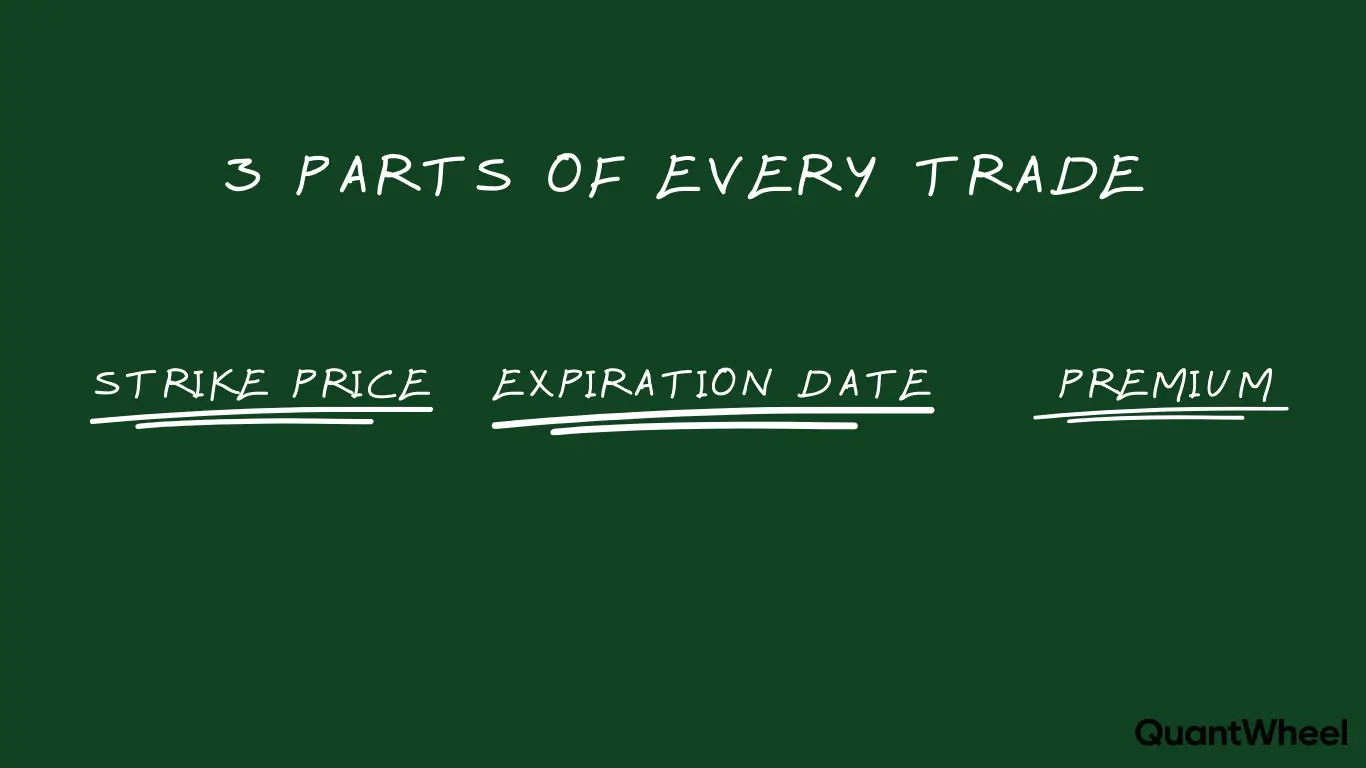
Every options contract contains four critical elements that define its characteristics:
1. The Underlying Asset - This is the stock or security the option controls. Most commonly, options are written on individual stocks, but they can also be based on indices (like SPY for the S&P 500), ETFs, or other securities. Each standard options contract represents 100 shares of the underlying asset.
2. The Strike Price - This is the predetermined price at which the option holder can buy (for calls) or sell (for puts) the underlying stock. The strike price remains fixed for the life of the contract, regardless of how the stock price moves. Options are available at multiple strike prices, typically in $2.50 or $5 increments depending on the stock price.
3. The Expiration Date - All options have a limited lifespan and expire on a specific date. Standard options expire on the third Friday of the month, but weekly options (expiring every Friday) and even daily options are now available for many popular stocks. After expiration, the option either gets exercised or becomes worthless.
4. The Premium - This is the price paid by the buyer to the seller for the option contract. The premium is quoted per share, so you multiply by 100 to get the actual cost. For example, a premium of $2.50 means the contract costs $250. This premium is what the buyer risks and what the seller keeps regardless of what happens to the stock.
Why Options Exist: The Economic Purpose
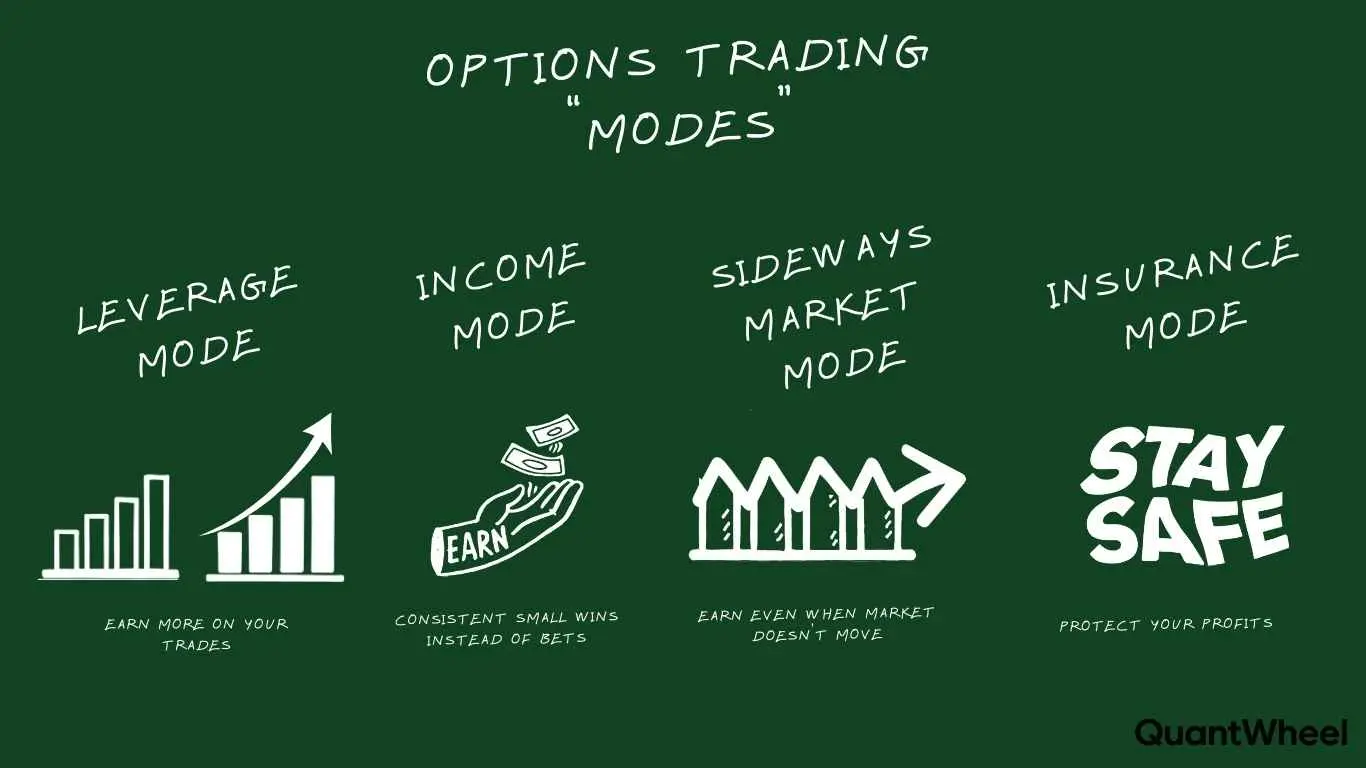
Options serve several important functions in financial markets beyond just speculation:
Risk Management: Companies and investors use options to hedge existing positions. For example, if you own 100 shares of a stock worth $50,000, buying a put option is like buying insurance - you pay a premium to protect against a significant decline.
Income Generation: Sellers of options collect premium income in exchange for taking on obligations. Strategies like covered calls and cash-secured puts allow investors to generate consistent income from stocks they own or want to own. This is the foundation of the wheel strategy popular in trading communities.
Price Discovery: Options markets help determine what traders collectively believe about a stock's future volatility and direction. High option premiums signal high expected volatility, while low premiums suggest stability.
Leverage and Capital Efficiency: Options allow traders to control large positions with relatively small capital outlays. A $300 call option can control $15,000 worth of stock, providing significant leverage (though this cuts both ways - small price movements have amplified effects).
How Options Work: From Purchase to Expiration
Understanding the options definition is one thing, but seeing how options function throughout their lifecycle makes the concept concrete.
The Options Chain: Where It All Begins
When you look up options for a stock, you'll see the options chain - a table displaying all available options contracts. The chain shows calls on one side and puts on the other, with various strike prices and expiration dates.
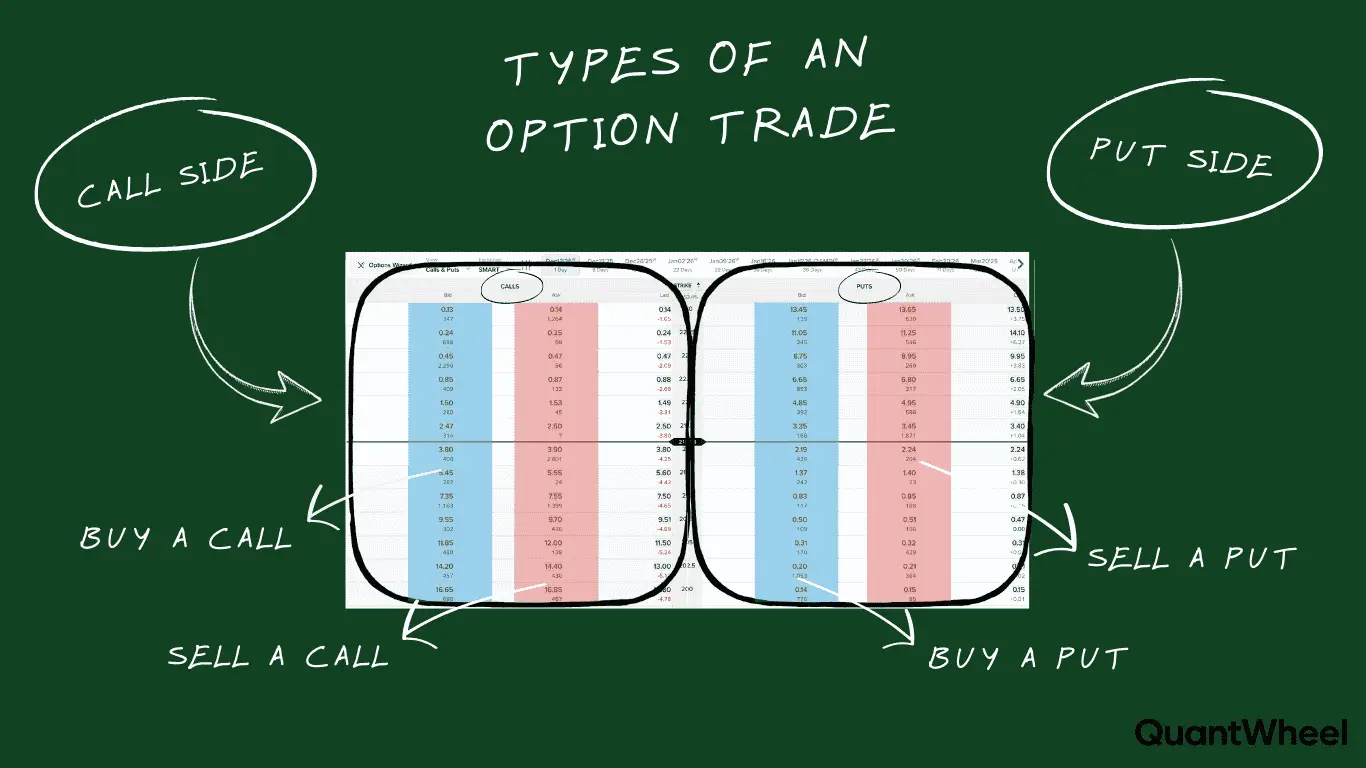
For a stock trading at $100, you might see:
- Calls at strikes of $95, $100, $105, $110, etc.
- Puts at the same strikes
- Multiple expiration dates: weekly, monthly, and quarterly
The options chain displays the bid price (what buyers are willing to pay), the ask price (what sellers want), and the last traded price. It also shows "Greeks" like Delta and Theta, which measure how the option's value changes with various factors.
Buying an Option: Opening the Position
Let's walk through a realistic example of buying a call option:
Scenario: You believe Tesla stock, currently at $200, will rise after earnings. You buy one call option with a $210 strike expiring in 30 days, paying a premium of $5 ($500 total).
What you've bought: The right to purchase 100 shares of Tesla at $210 per share anytime before expiration, regardless of where the stock trades.
Your risk: Limited to $500 - this is the maximum you can lose.
Your potential profit: Theoretically unlimited. If Tesla goes to $250, you can buy it at $210 (using your option) and immediately sell at $250, profiting $40 per share ($4,000), minus the $500 premium = $3,500 profit.
Your breakeven: $215 per share ($210 strike + $5 premium). The stock must rise above $215 for you to profit at expiration.
Time Decay: The Silent Killer
One crucial aspect of the options definition that surprises beginners is time decay, also called theta decay. Unlike stocks that can be held indefinitely, options lose value as they approach expiration, even if the stock doesn't move.
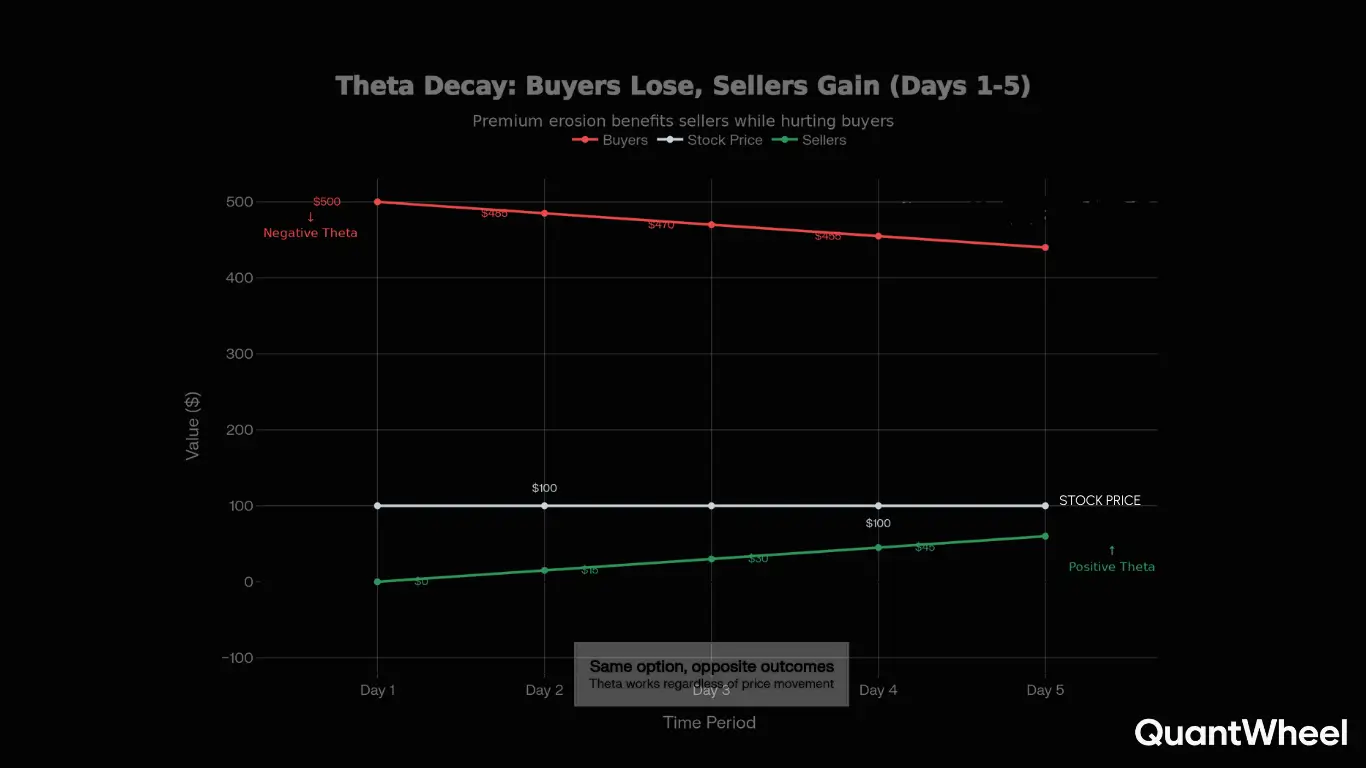
Using our Tesla example: if the stock stays at $200 for 15 days, your option's value might drop from $5 to $2 even though the stock price is unchanged. This happens because there's less time for the stock to reach $210. Time decay accelerates as expiration approaches, with the most rapid decay occurring in the final week.
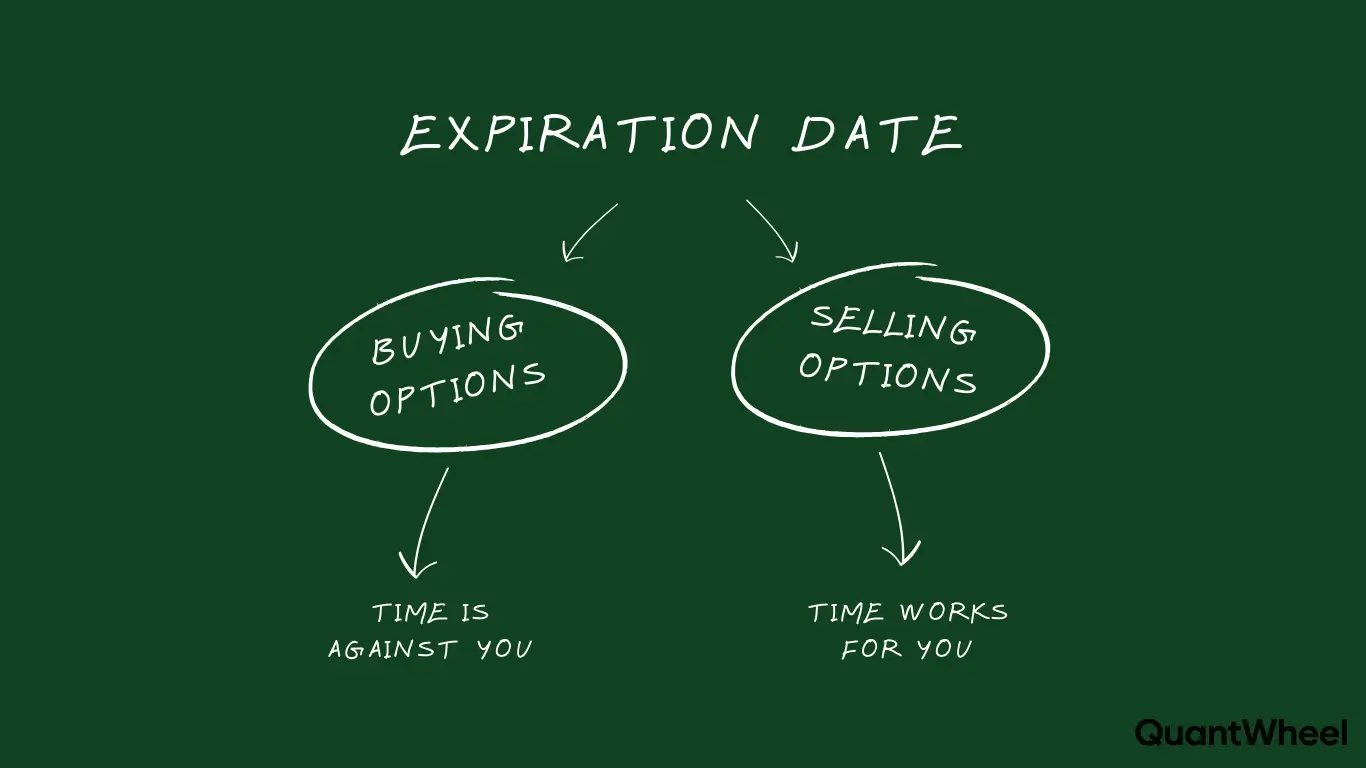
This is why option buyers need directional movement relatively quickly, while option sellers benefit from time decay working in their favor. Traders who sell options are essentially betting that the stock won't move enough to offset the time decay they collect.
The Four Possible Outcomes at Expiration
When expiration day arrives, your option will fall into one of these categories:
1. Deep In The Money (ITM): The option has significant intrinsic value. For our Tesla example, if the stock is at $230, your $210 call is $20 ITM. Your broker will typically auto-exercise the option, and you'll be assigned 100 shares at $210. Most traders close ITM options before expiration to avoid assignment.
2. Slightly In The Money: If Tesla is at $212, your call has $2 of intrinsic value. Whether to exercise depends on your broker's policies and whether you want the shares. Some brokers auto-exercise options more than $0.01 ITM at expiration.
3. At The Money (ATM): The stock is exactly at your strike price ($210). This is the most uncertain scenario - the option has no intrinsic value but could still be exercised. Most traders close ATM options before expiration.
4. Out of The Money (OTM): If Tesla ends at $208, your $210 call expires worthless. You don't need to do anything - the contract simply disappears, and you've lost your $500 premium.
The Option Seller's Side: Writing Contracts
The options definition encompasses both buyers and sellers, but sellers have very different risk profiles and obligations.
Selling Cash-Secured Puts: The Conservative Approach
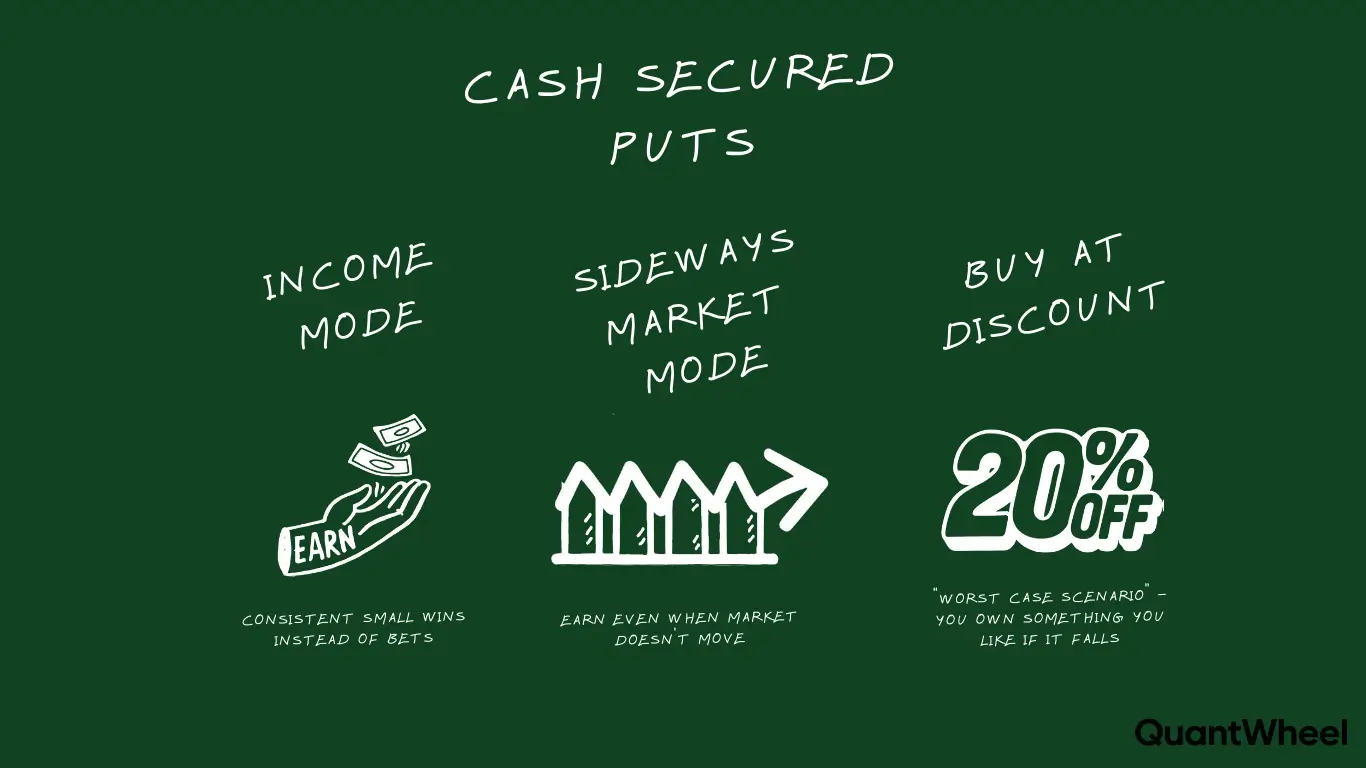
When you sell (or "write") a put option, you're taking the opposite side of the option buyer. You collect the premium upfront but take on the obligation to buy the stock at the strike price if assigned.
Example: You sell a put option on Microsoft at a $300 strike with 45 days until expiration, collecting a $6 premium ($600).
What you receive: $600 immediately deposited to your account.
Your obligation: If Microsoft drops below $300 at expiration, you must buy 100 shares at $300 each, requiring $30,000. This is why it's called "cash-secured" - you need $30,000 in your account to cover the potential purchase.
Your maximum profit: $600 (the premium collected). This occurs if Microsoft stays above $300 and the option expires worthless.
Your maximum risk: $29,400 (the $30,000 purchase price minus the $600 premium). This would occur if Microsoft went to $0, though that's highly unlikely.
Your breakeven: $294 per share ($300 strike - $6 premium). Even if you're assigned at $300, the premium you collected reduces your cost basis to $294.
This strategy is popular with traders who want to own quality stocks and don't mind buying them at a discount to the current price. Many wheel strategy traders use this as their primary approach to enter positions.
Selling Covered Calls: Income on Owned Shares
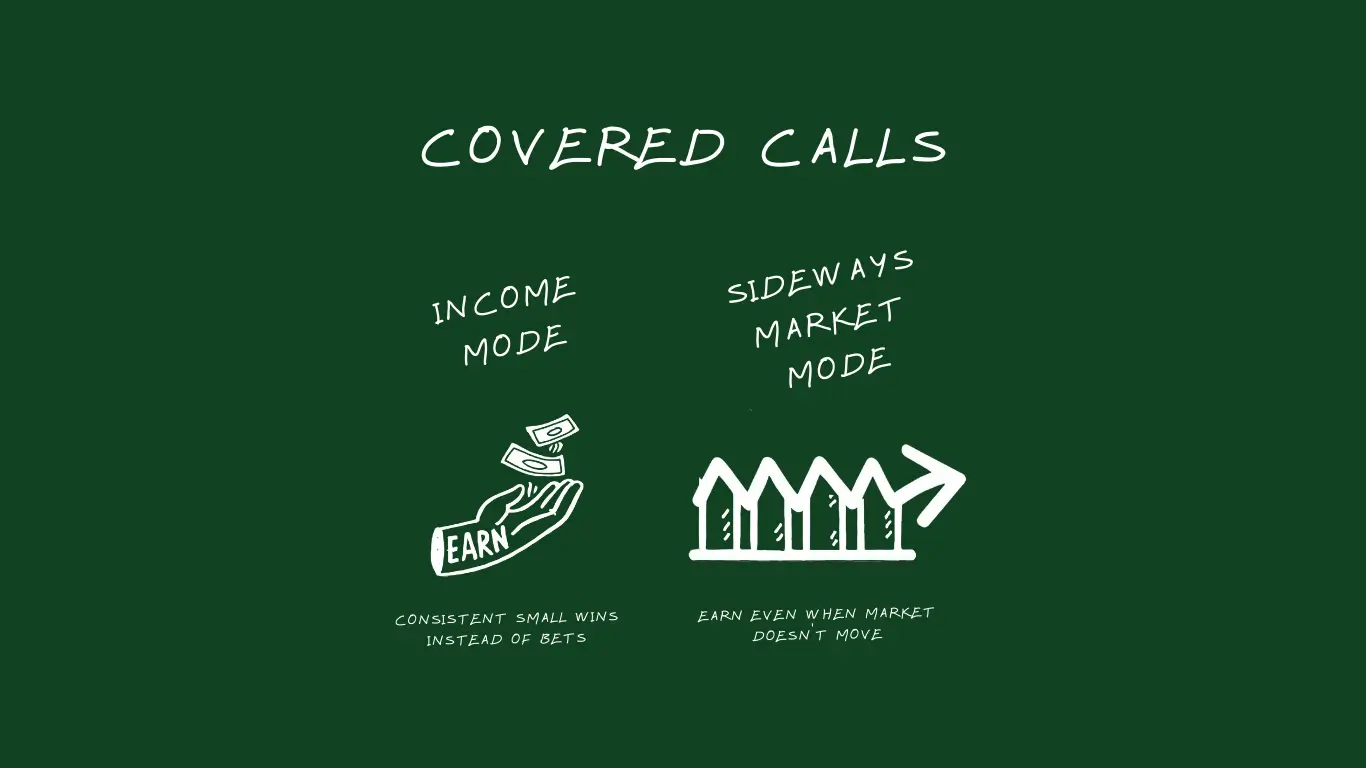
If you already own 100 shares of a stock, you can sell call options against those shares to generate income.
Example: You own 100 shares of Apple purchased at $150, currently trading at $160. You sell a call option at a $170 strike expiring in 30 days, collecting a $3 premium ($300).
What you receive: $300 immediately.
Your obligation: If Apple rises above $170, your shares will be "called away" - you must sell them at $170.
Your maximum profit: $2,300. This comes from the $10 appreciation ($150 to $160 unrealized), the $10 gain from $160 to $170 if assigned, plus the $300 premium.
Your risk: You miss out on gains above $170. If Apple soars to $200, you still only get $170 per share.
This strategy is used by long-term investors who want to generate extra income from stocks they intend to hold. It's particularly effective in sideways or mildly bullish markets.
Understanding Assignment: When Options Become Shares
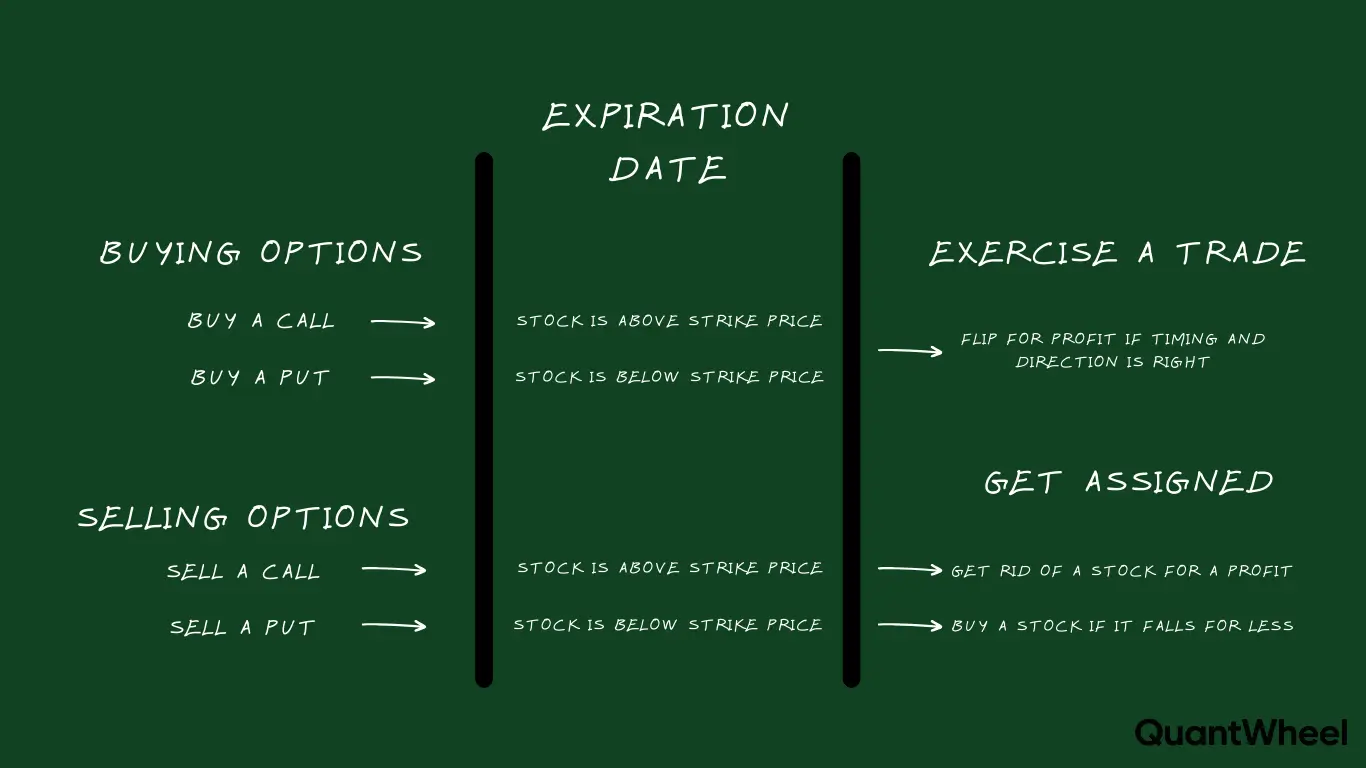
Assignment is what happens when an option buyer exercises their right, forcing the seller to fulfill their obligation. For option sellers, understanding assignment is crucial to the options definition.
Assignment typically happens in three scenarios:
1. At Expiration: If your sold option is in the money at expiration, assignment is almost certain. If you sold a $100 put and the stock closes at $95, you'll be assigned 100 shares at $100.
2. Before Expiration (Early Assignment): This is rare for American-style stock options but can happen, usually on the day before an ex-dividend date (the buyer wants the dividend) or for deep in-the-money options (the time value has evaporated).
3. After Market Hours: Assignment notifications arrive after the market closes on expiration Friday, or occasionally over the weekend. You wake up Monday with new shares in your account.
Many traders who get assigned on cash-secured puts don't view it as a bad outcome - they wanted to own the stock anyway. This is the mindset behind the wheel strategy, where assignment is "part of the plan" rather than something to fear. However, managing your cost basis through assignment becomes critical, which is where tracking tools become essential for serious traders.
Options Terminology: Speaking the Language
To fully grasp the options definition and participate in options trading, you need to understand key terminology:
Moneyness: ITM, ATM, OTM
In The Money (ITM): The option has intrinsic value.
- For calls: Strike price < Stock price (e.g., $95 call when stock is $100)
- For puts: Strike price > Stock price (e.g., $105 put when stock is $100)
At The Money (ATM): Strike price equals (or is very close to) the stock price. ATM options have maximum time value and are highly sensitive to price movement.
Out of The Money (OTM): The option has no intrinsic value, only time value.
- For calls: Strike price > Stock price
- For puts: Strike price < Stock price
Intrinsic vs. Extrinsic Value
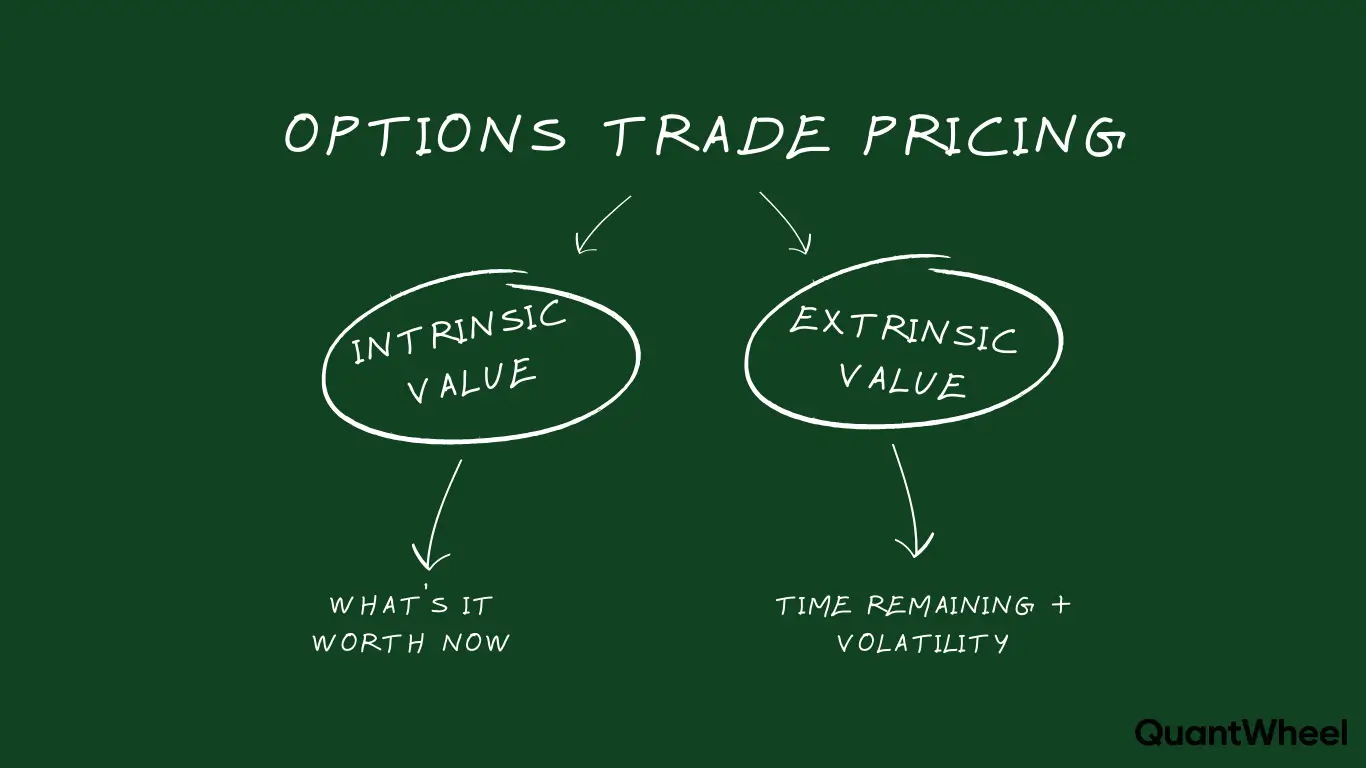
An option's premium consists of two components:
Intrinsic Value: The amount the option is ITM. A call with a $95 strike on a $100 stock has $5 of intrinsic value. This is real value that could be realized immediately upon exercise.
Extrinsic Value (or Time Value): The premium above intrinsic value. If that same option trades for $8, it has $3 of extrinsic value. This represents the market's belief that the option could become more valuable before expiration.
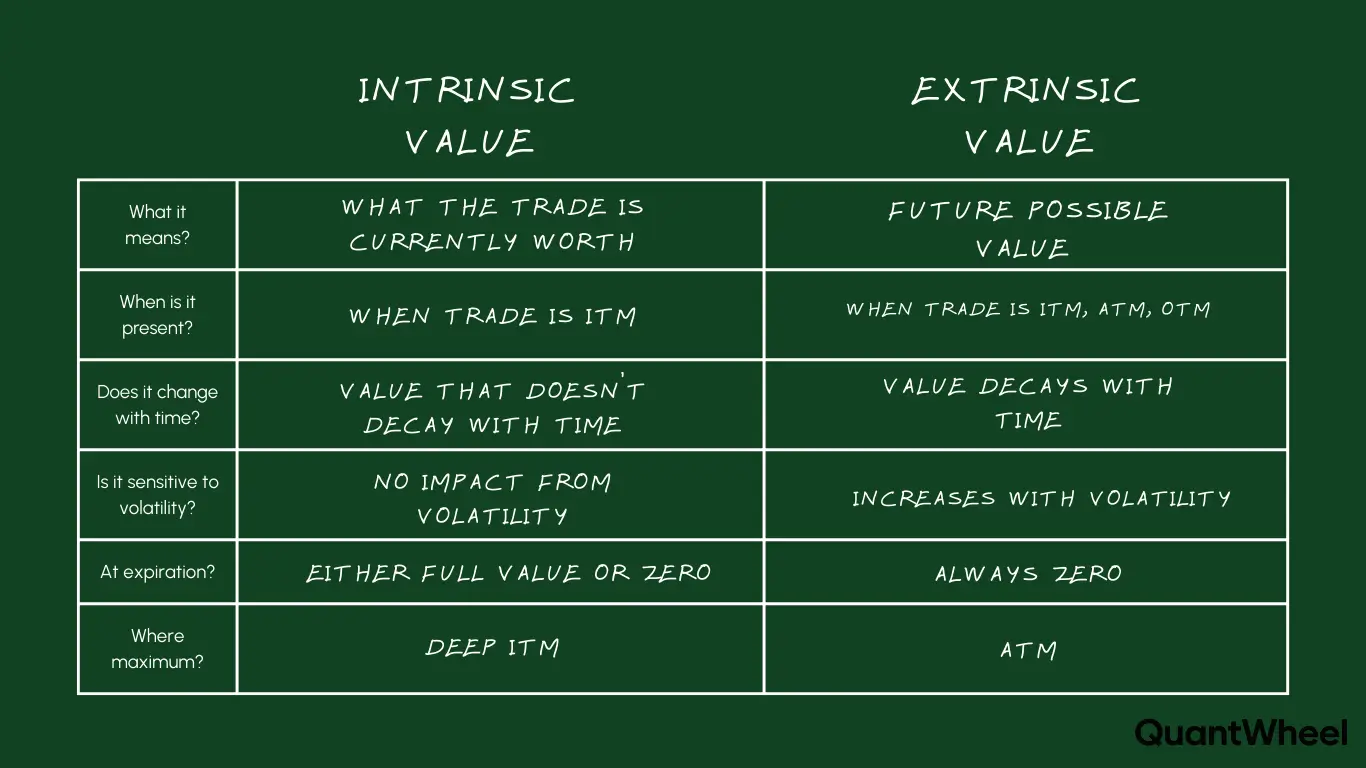
OTM options consist entirely of extrinsic value. As expiration approaches, extrinsic value decays toward zero, which is why options sellers collect theta decay - the time works in their favor.
The Greeks: Measuring Risk
While not essential for beginners, understanding basic Greeks helps quantify how options change with market conditions:
Delta: Measures how much the option price changes for a $1 move in the stock. A call with 0.50 delta increases by $0.50 when the stock rises $1. Delta also approximates the probability of finishing ITM.
Theta: Measures time decay per day. A theta of -0.05 means the option loses $0.05 in value daily, all else equal. Option sellers love positive theta.
Vega: Measures sensitivity to implied volatility changes. High vega options are more affected by volatility swings, important during earnings or market turbulence.
Gamma: Measures how delta changes. High gamma options have rapidly changing deltas, creating acceleration in profits or losses.
Open Interest and Volume
Volume: The number of contracts traded today. High volume indicates liquidity and tighter bid-ask spreads.
Open Interest: The total number of outstanding contracts. High open interest suggests active trading and reliable pricing.
Both metrics are important for ensuring you can enter and exit positions without excessive slippage.
Options vs. Stocks: Key Differences
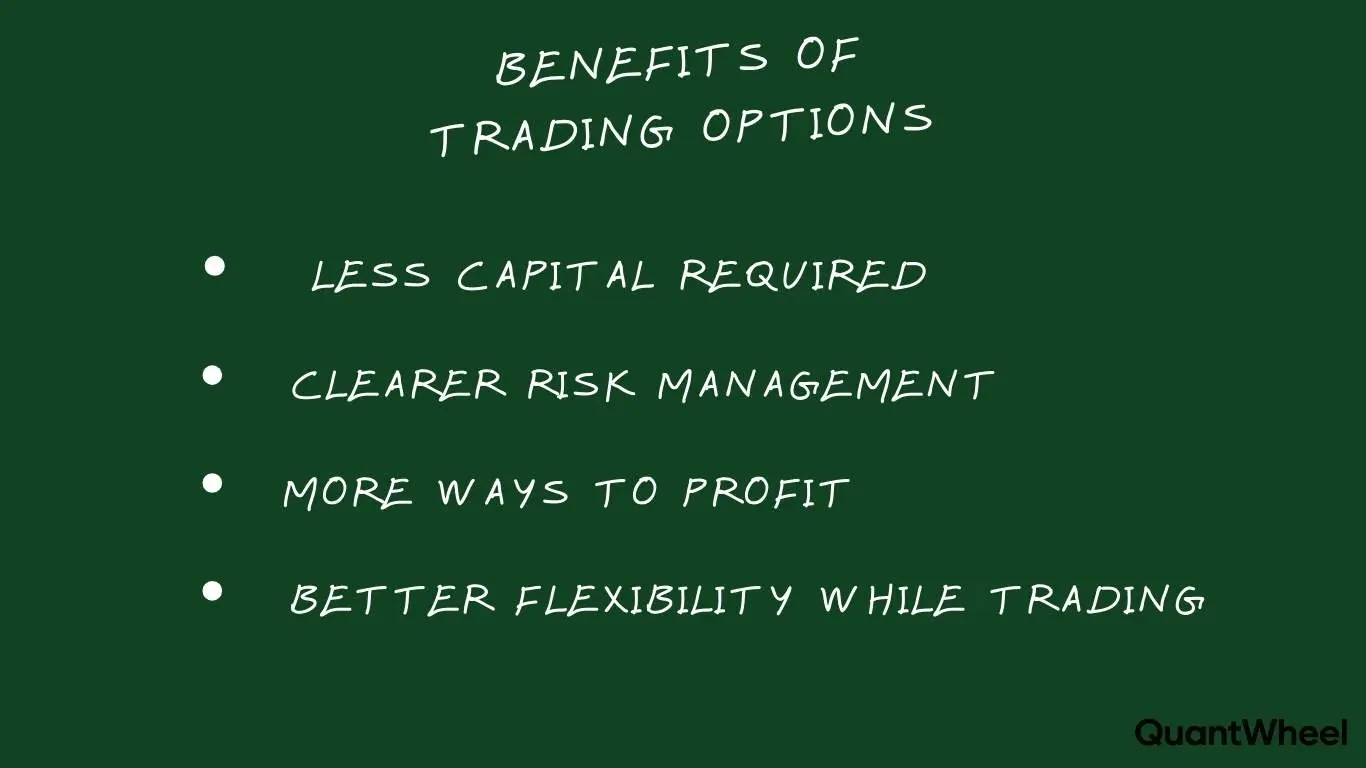
Understanding the options definition requires recognizing how they differ from simply buying stocks:
Time Limitation
Stocks can be held forever. If you buy Apple at $150 and it drops to $120, you can wait years for it to recover. Options expire, forcing time pressure on your decision. This makes options unsuitable for "wait and see" approaches.
Leverage
A $10,000 investment buys 100 shares of a $100 stock. The same $10,000 might buy 30 call option contracts controlling 3,000 shares. This leverage magnifies both gains and losses, making options far more volatile than the underlying stock.
Complexity
Buying stocks is simple: you pay the current price and own shares. Options involve choosing strikes, expirations, and strategies. You must consider time decay, implied volatility, and multiple exit scenarios. This complexity is why proper education is essential.
Risk Profile
Stock buyers have straightforward risk: the stock can go to zero. Option buyers have defined risk (the premium paid) but face time decay. Option sellers have defined maximum profit but often larger potential losses, requiring more capital and risk management.
Common Options Strategies: Applying the Definition
Once you understand what options are, you can explore how traders use them:
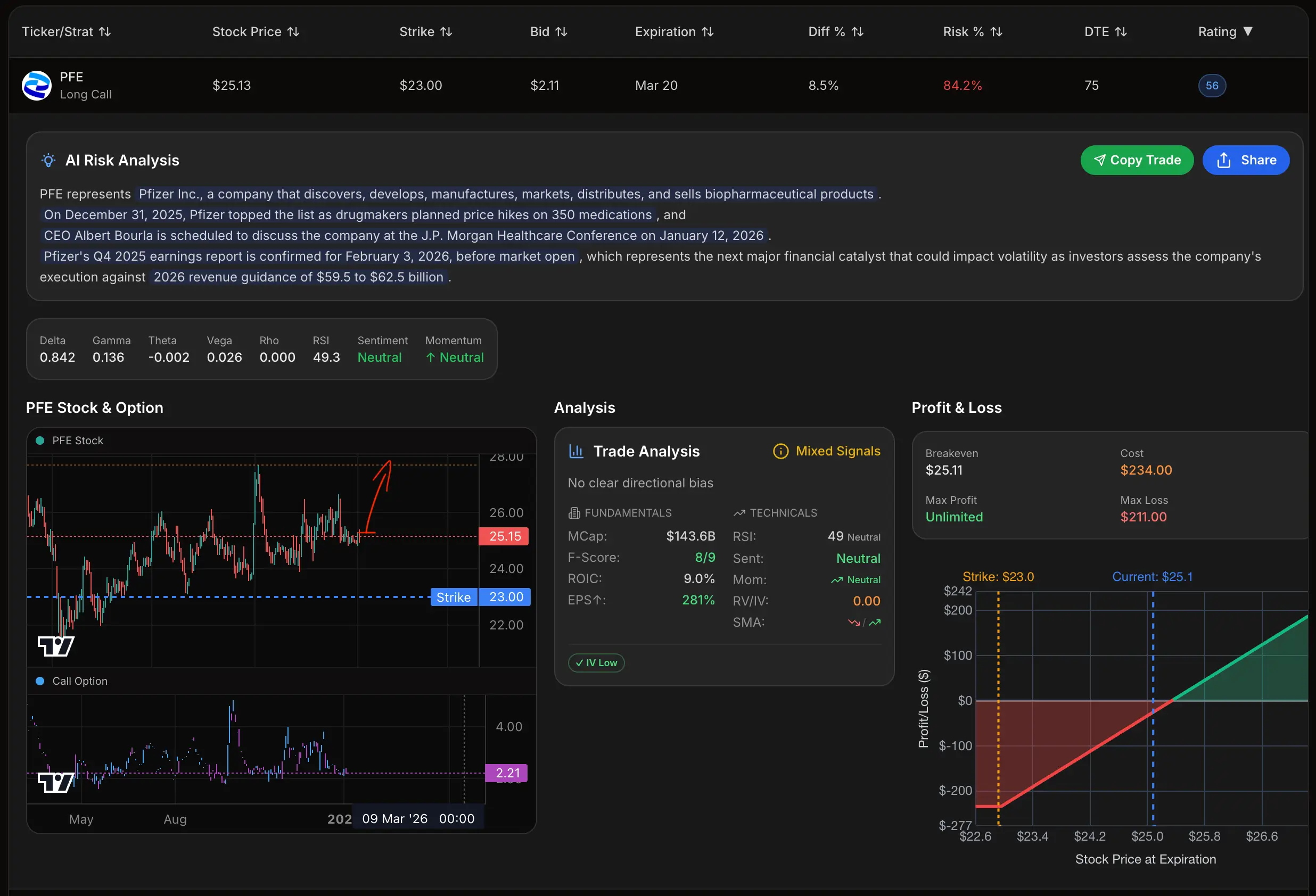
Long Call: Bullish Speculation
Buying calls is the simplest bullish strategy. You pay a premium for the right to profit if the stock rises. Your maximum loss is the premium, your maximum gain is theoretically unlimited, and your breakeven is the strike plus the premium paid.
Best used when: You're strongly bullish short-term, expect a catalyst (earnings, product launch), and can afford to lose the entire premium if wrong.
Example trade:
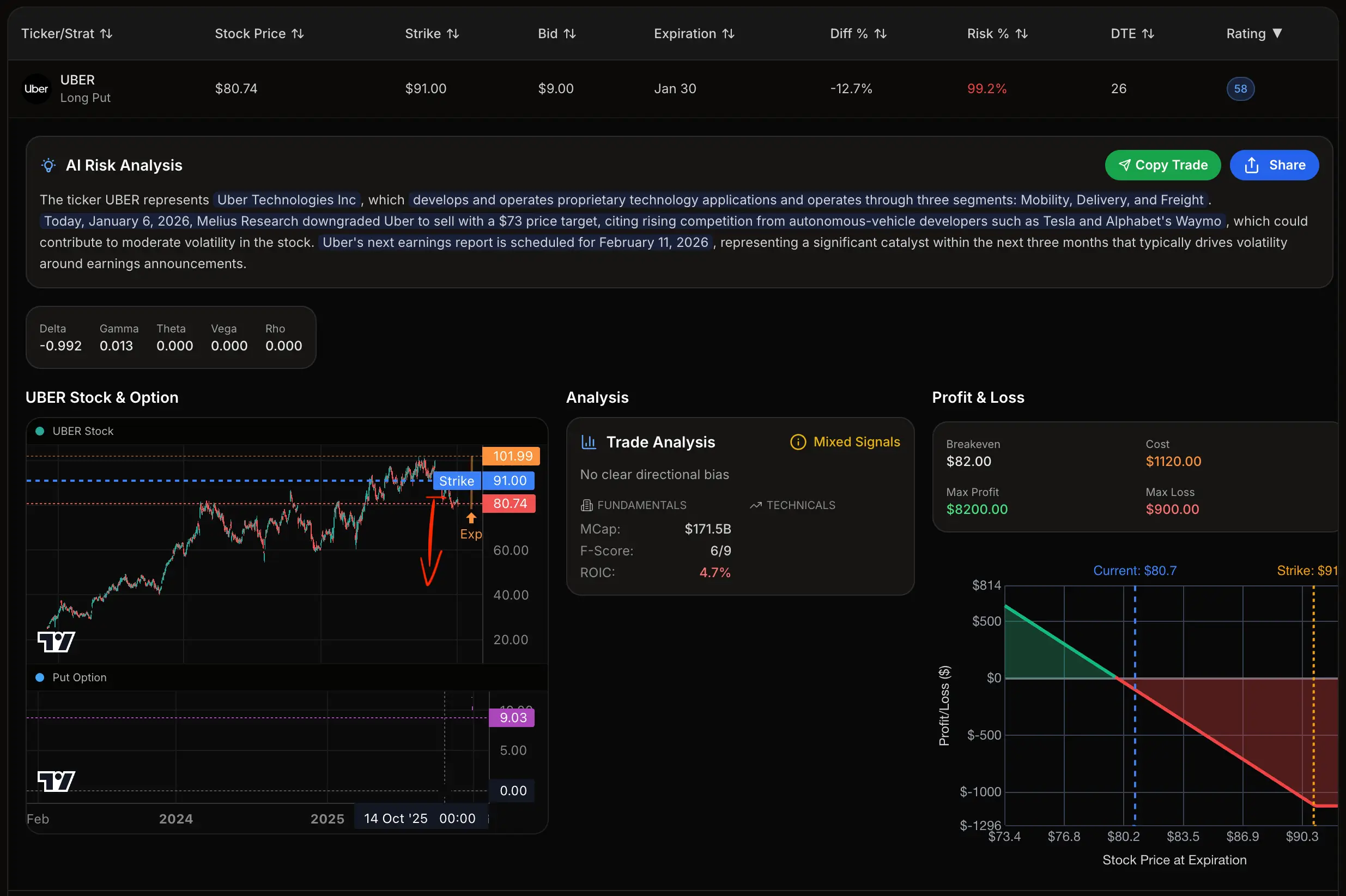
Long Put: Bearish Speculation or Protection
Buying puts profits from declining stocks or protects existing long positions. A put purchase on a stock you own acts as insurance, limiting downside risk.
Best used when: You're bearish, want to hedge long stock positions, or anticipate short-term volatility.
Example trade:
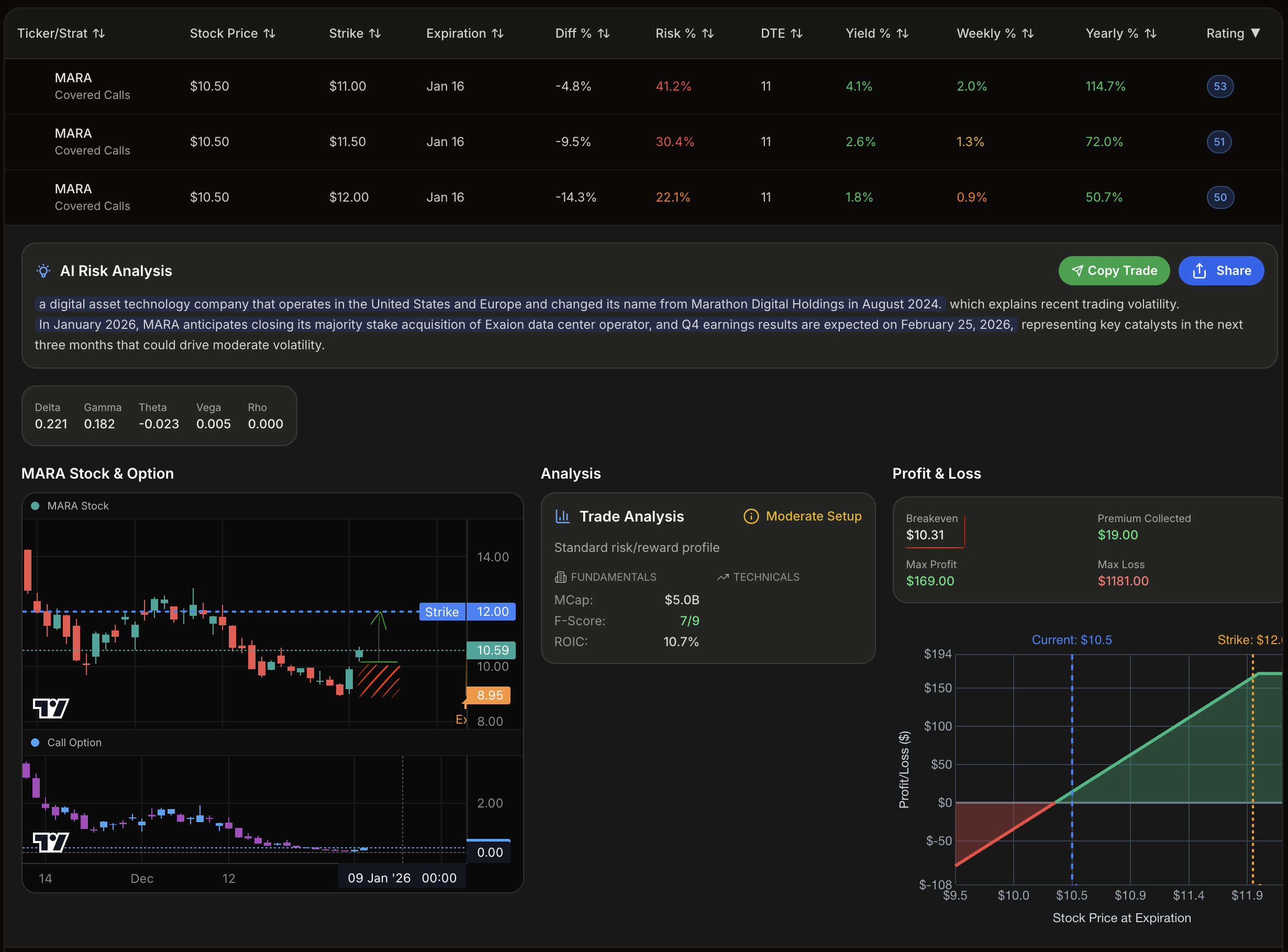
Covered Call: Income Generation
Selling calls against stock you own generates income from premiums. Your upside is capped at the strike price, but you keep collecting premiums in sideways markets.
Best used when: You own the stock, expect modest price movement, and want extra income. This is foundational to many income-focused strategies.
Example trade:
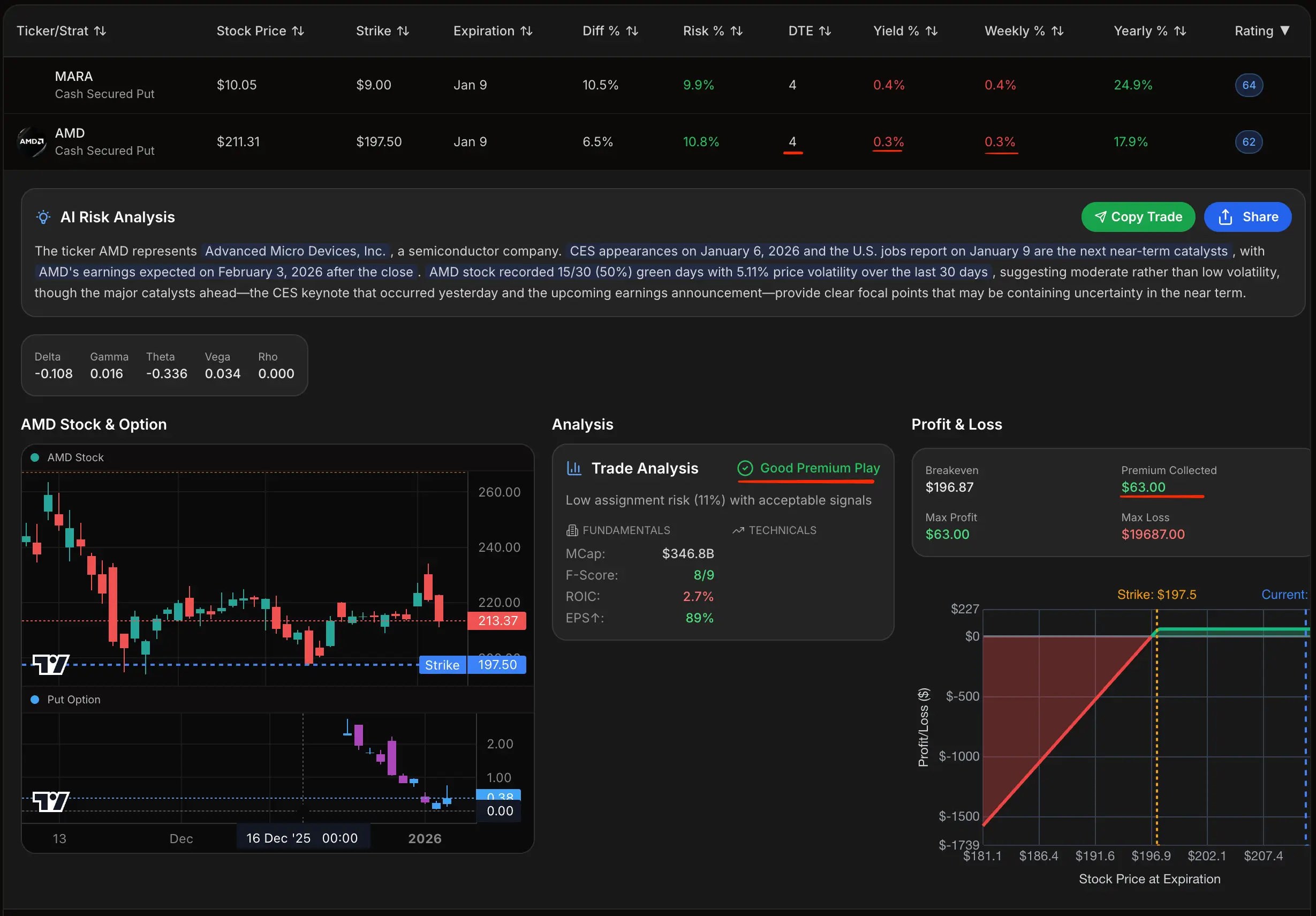
Cash-Secured Put: Stock Acquisition with Income
Selling puts obligates you to buy stock at the strike price while collecting premium. If assigned, your cost basis is reduced by the premium, giving you a better entry than buying at market price.
Best used when: You want to own a quality stock and wouldn't mind buying it at a discount to the current price. Example trade:
The Wheel Strategy: Systematic Income
The wheel combines cash-secured puts and covered calls in a continuous cycle: sell puts until assigned, then sell calls on the shares, repeating indefinitely. This strategy has gained popularity on Reddit's r/thetagang because it's relatively conservative, systematic, and generates consistent income (though not without risk).
Best used when: You want a methodical approach to generating income, can handle stock ownership through assignments, and prefer systematic rules over discretionary decisions.
The challenge with the wheel is tracking positions accurately through the complete cycle - from put sale to assignment to covered call sale to stock sale. Your cost basis adjusts with each leg, and manual tracking in spreadsheets quickly becomes overwhelming past 5-10 positions. This is where specialized tracking tools become valuable for serious traders.
The Real Costs: What You Need to Know
The options definition is incomplete without understanding the actual costs involved:
Option Premiums: The Obvious Cost
The premium is what you see - $5 per share, or $500 per contract. But premium costs vary dramatically based on volatility, time to expiration, and distance from the strike price. The same stock might have options ranging from $0.50 to $20 depending on these factors.
Bid-Ask Spread: The Hidden Cost
Options don't trade like stocks with tight spreads. A typical spread might be $0.10-$0.20, meaning you lose $10-$20 just entering and exiting a position. On illiquid options, spreads can be $0.50 or more, creating substantial friction costs.
Example: An option shows a bid of $4.80 and ask of $5.20. If you buy at $5.20 and immediately sell at $4.80, you lose $40 per contract (plus commissions) without the stock moving at all.
Commissions: The Per-Contract Fee
Most brokers charge $0.50-$0.65 per contract plus base fees. At 10 contracts, you might pay $6-$8 round-trip. These add up quickly for active traders, making commission structure an important broker selection criteria.
Assignment Fees
Some brokers charge $5-$20 when options are exercised or assigned. If you run the wheel strategy and get assigned regularly, these fees accumulate. Always check your broker's fee schedule.
Margin Requirements
Option sellers need significant capital. Selling a cash-secured put on a $100 stock requires $10,000 in cash. Margin accounts have different requirements but still tie up substantial buying power, limiting how many positions you can run simultaneously.
Risk Management: Essential for Options Trading
Understanding what options are is insufficient without knowing how to manage risk:
Position Sizing
The number one rule: Never risk more than you can afford to lose on any single position. Conservative traders risk 1-2% of account value per trade. On a $50,000 account, that's $500-$1,000 per position.
For option buyers, this means limiting position sizes so that even total premium loss doesn't devastate your account. For option sellers, ensure you have adequate capital to handle assignment and potential stock declines.
Defined Exit Rules
Before entering any options trade, know exactly when you'll exit:
Profit targets: Many traders close at 50% of maximum profit. If you collected $2 in premium, you buy back at $1 when available, banking $1 profit and eliminating remaining risk.
Loss limits: Setting a stop-loss at 2x the premium collected is common. If you collected $2, you close if the cost to buy back reaches $4, limiting losses to the original premium collected.
Time-based exits: Some traders close all positions at a specific DTE (days to expiration), such as 21 days, to avoid gamma risk in the final weeks.
Without predefined rules, emotions take over, leading to holding losing positions too long and cutting winners too early.
Diversification
Don't concentrate all positions in one stock or sector. If you're running the wheel on 10 tech stocks and tech sells off, all positions move against you simultaneously. Spread across sectors, market caps, and volatility profiles to reduce correlated risk.
Avoiding Undefined Risk
Strategies with undefined risk (like naked calls) can generate outsized losses. Stick to defined-risk strategies, especially when learning. Cash-secured puts have defined maximum loss ($29,400 on a $300 strike after collecting premium), while naked calls have theoretically unlimited risk.
Common Mistakes: What Beginners Get Wrong
Learning the options definition is one thing; applying it successfully requires avoiding these pitfalls:
Mistake #1: Buying OTM Options Hoping for Lotteries
Beginners often buy cheap, far OTM options because they control more shares for less money. A $0.50 option seems appealing compared to a $5 option. But these options have very low probability of profit and decay rapidly. Options are not lottery tickets - the math eventually catches up.
Mistake #2: Selling Puts Without Understanding Assignment
New traders sell puts for premium without realizing they must buy 100 shares if assigned. If you sell a $50 put without $5,000 available, you'll face margin calls or position liquidation. Always ensure you can handle assignment before selling puts.
Mistake #3: Ignoring Time Decay
Option buyers often think they're right about direction but lose money anyway because time decay overwhelms directional gains. If you buy an option 60 days out and the stock doesn't move for 30 days, you might be down 40% even though your thesis was correct.
Mistake #4: Overtrading
Options have commissions, spreads, and tax implications. Every trade incurs costs. Some beginners trade daily, churning their accounts with fees and taxes while giving back profits to market makers. Quality over quantity wins in options trading.
Mistake #5: Not Tracking Positions Properly
As you accumulate multiple options positions, tracking cost basis, expiration dates, profit targets, and risk becomes complex. Many traders use spreadsheets initially, but these break down past 5-10 positions. Forgetting an expiration or miscalculating cost basis after assignment can turn profitable strategies into losing ones.
Serious wheel strategy traders run 15-30 positions simultaneously, making position tracking critical. Missing one assignment can throw off your entire tracking system if you're manually calculating cost basis through each cycle.
Tools and Resources for Options Traders
Successfully trading options requires the right tools:
Options Data and Analysis
You need real-time or near-real-time options chains to see current pricing, volume, and open interest. Most brokers provide this, but the quality and speed vary significantly. Delayed data can mean missing opportunities or entering at worse prices.
Options Screening and Selection
Finding suitable options among hundreds of thousands of available contracts is challenging. Options screeners filter by criteria like DTE, delta, premium yield, and implied volatility. Basic screeners are available free through brokers, but they're often slow, especially when scanning many tickers simultaneously.
ThinkorSwim is popular but can take 5-10 minutes to scan just 50 stocks with options data. For traders running systematic strategies like the wheel, this inefficiency means missing high-IV opportunities that appear and disappear within hours.
Position Tracking and Management
This is where most traders struggle. Your broker shows your current positions but doesn't track full wheel cycles, adjust cost basis through assignments, or alert you when positions hit your predetermined rules.
After managing multiple wheel positions and getting assigned regularly, manual tracking becomes a nightmare. Your real cost basis after collecting CSP premium, getting assigned, then selling covered calls is different from what your broker shows. Calculating this manually for 15 positions is error-prone and time-consuming.
This is exactly where tools built specifically for systematic strategies become valuable. QuantWheel's automated journal tracks complete wheel cycles, adjusts cost basis through assignments, and provides alerts based on your specific trading rules - eliminating the manual spreadsheet work that most wheel traders hate.
Start your free trial of QuantWheel to experience automated position tracking built for options strategies.
Is Options Trading Right for You?
Understanding the options definition doesn't mean options are appropriate for your situation:
You Might Be Ready If:
- You understand basic stock investing and have trading experience
- You can afford to lose the capital you allocate to options
- You're willing to actively manage positions, not "set and forget"
- You can handle the emotional pressure of time-limited decisions
- You want defined-risk strategies or systematic income generation
- You're committed to ongoing education and learning from mistakes
Options Might Not Fit If:
- You're extremely risk-averse and can't tolerate volatility
- You don't have time for active position management
- You're looking for "get rich quick" schemes
- Your investment timeline is 10+ years (stocks are simpler)
- You're not willing to learn terminology, strategies, and risk management
- You can't afford to lose the capital you'd allocate
Options are tools. Like power tools, they're incredibly useful in skilled hands but dangerous when misused. Honest self-assessment of your risk tolerance, time availability, and emotional discipline is essential before starting.
Getting Started: Your First Steps
If you've decided options fit your goals, here's how to begin:
Step 1: Paper Trading
Most brokers offer paper trading (simulated trading with fake money). Spend at least 30 days trading strategies in simulation. Track your decisions, results, and emotional reactions. If you can't profit in simulation, you won't profit with real money.
Step 2: Start Small and Simple
Begin with single-leg strategies (buying calls/puts or selling covered calls on stock you own). Don't jump into complex multi-leg spreads. Use small position sizes - risk $100-$200 per trade maximum while learning.
Step 3: Focus on Education
Read articles, watch educational content, and participate in communities like r/thetagang or r/options. Focus on understanding "why" strategies work, not just "how" to execute them. Understanding the reasoning behind position management decisions is more valuable than memorizing rules.
Step 4: Choose the Right Broker
Not all brokers are equal for options. Key factors include:
- Commission structure ($0.50-$0.65 per contract is standard)
- Options chain quality and speed
- Mobile trading capabilities (for managing positions away from desk)
- Customer service and education resources
- Integration with tracking tools (if you plan to use external systems)
Step 5: Develop Your Strategy
Don't try to learn everything at once. Pick one strategy - perhaps covered calls or cash-secured puts - and master it before expanding. Understand that strategy's strengths, weaknesses, optimal market conditions, and risk management approaches.
Many traders find success with the wheel strategy because it's systematic and doesn't require predicting market direction. You're collecting premium either way - whether selling puts or covered calls.
Step 6: Implement Position Tracking Early
From your very first trade, track positions properly. Record entry price, strike, expiration, premium collected/paid, your exit rules, and actual results. This creates a feedback loop for improvement.
As you scale to multiple positions, consider whether spreadsheets remain adequate. Most active traders discover that manual tracking past 8-10 simultaneous positions becomes unsustainable, especially for strategies involving assignment and stock ownership.
Conclusion: Your Options Journey Begins
The options definition - financial contracts granting the right but not obligation to buy or sell assets at predetermined prices - is straightforward. But truly understanding options means grasping their mechanics, strategies, risks, and practical applications.
Options aren't inherently risky or safe - they're tools that reflect how you use them. Approached with education, discipline, and proper risk management, options can serve multiple purposes: generating income, hedging portfolios, or efficiently speculating on price movements.
The key is starting with a solid foundation in the basics covered in this guide, then building experience gradually with small positions and continuous learning. Whether you pursue the wheel strategy for systematic income, buy options for directional plays, or use protective puts for portfolio insurance, success comes from understanding what you're doing and why.
Remember that options trading is a skill developed over time, not mastered in days or weeks. Be patient with yourself, learn from both winning and losing trades, and never risk capital you can't afford to lose.
$1 for 7 days • Cancel anytime • 14-day money-back guarantee
Risk Disclosure
Options trading involves substantial risk and is not suitable for all investors. Past performance does not guarantee future results. This content is for educational purposes only and should not be considered investment advice. Always do your own research and consider consulting with a financial advisor before making investment decisions.
The examples used in this article are for educational purposes only and are not recommendations to buy or sell any security. All investment decisions should be based on your own analysis and risk tolerance.