
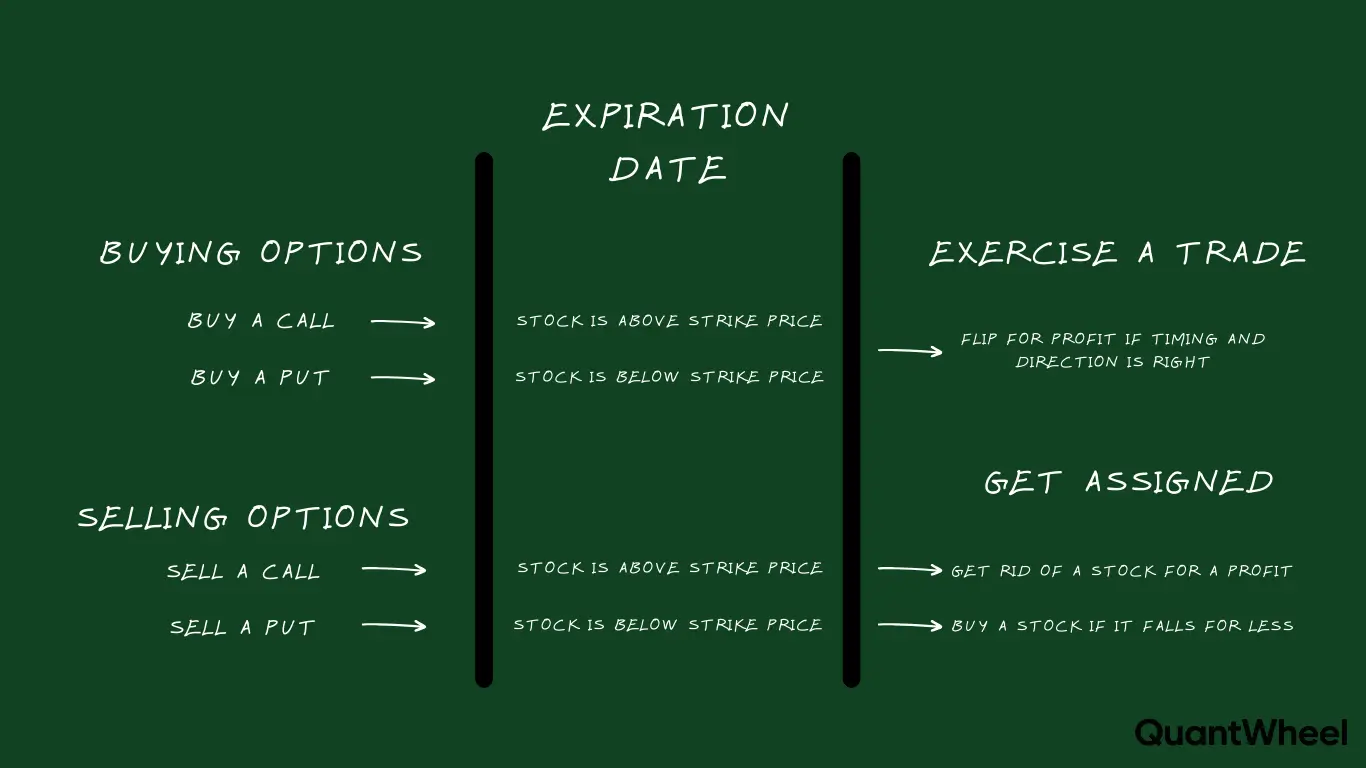
You just sold your first cash-secured put as part of the wheel strategy. Two weeks later, you wake up to find 100 shares of stock in your account. What happened? You got assigned. But what does that mean, and how is it different from "exercise" that you keep hearing about?
For many options traders, especially those running the wheel strategy, understanding the difference between exercise and assignment is crucial. These aren't just technical terms - they determine who controls what happens to your options, when money moves in your account, and how you need to track your positions.
$1 for 7 days • Cancel anytime • 14-day money-back guarantee
What This Article Covers
If you've been confused about exercise vs assignment, in this guide you'll learn exactly what each term means, who controls what, when they happen, and most importantly, how they affect your wheel strategy trading.
TLDR: Exercise vs Assignment - The Simple Answer
Exercise = What the option buyer does (by choice) Assignment = What happens to the option seller (by obligation)
Think of options like a contract between two people:
- The buyer pays a premium upfront and gets a right (but not obligation) to buy or sell stock
- The seller receives that premium and accepts an obligation to deliver if the buyer exercises
Simple example: You sell a cash-secured put on Stock XYZ at a $50 strike for $2 premium.
- If the buyer exercises: They decide to sell you 100 shares at $50 each
- You get assigned: You're obligated to buy those 100 shares for $5,000 ($50 × 100)
- Your real cost: Your cost basis is actually $48 per share because you collected $2 premium
- Result: You own 100 shares at an effective price of $48, even though your broker shows $50
The buyer chose to exercise. You didn't choose to get assigned - it happened because of their decision. That's the fundamental difference.
Understanding Options: Buyer vs Seller Perspectives
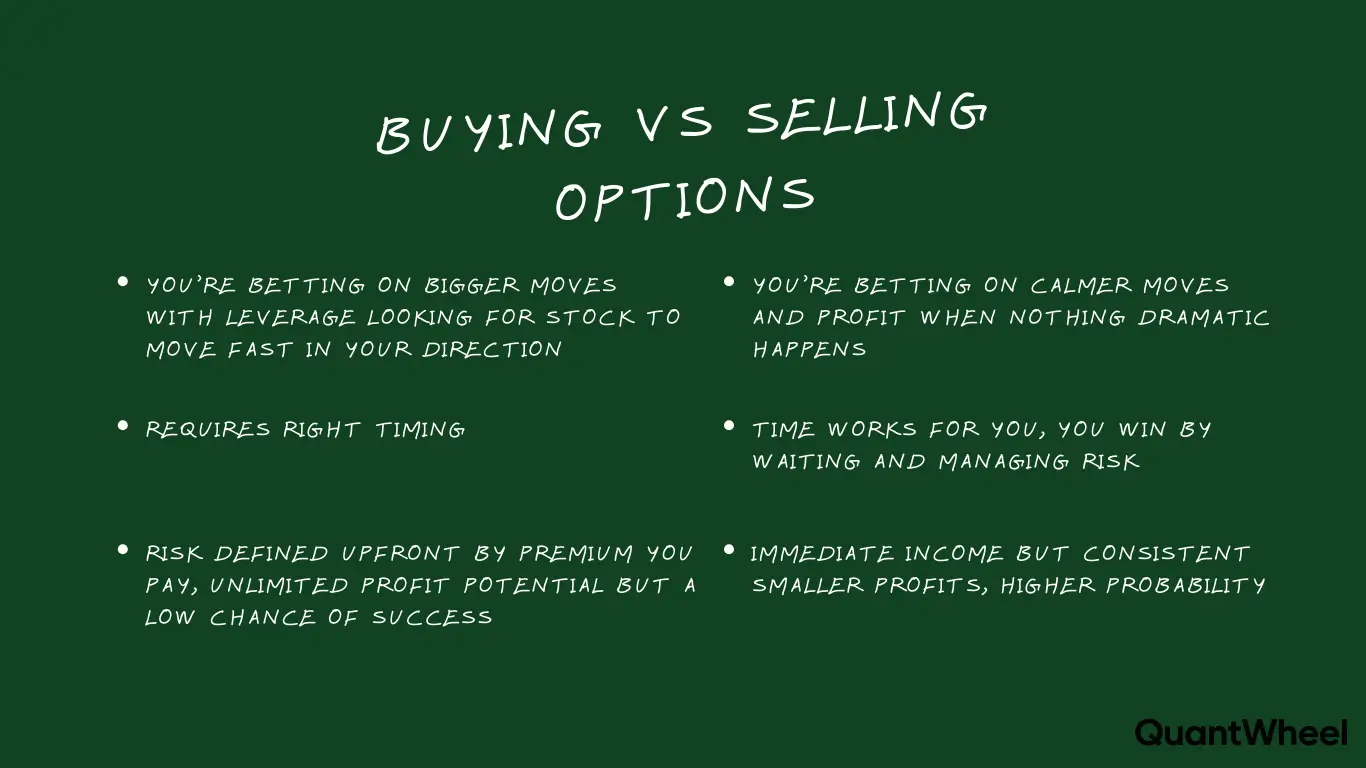
Before diving into exercise and assignment, let's establish who has control in an options contract.
Option Buyers Have Rights
When you buy an option, you're purchasing the right to:
- Call option: Buy 100 shares at the strike price
- Put option: Sell 100 shares at the strike price
You paid a premium for this right. You can exercise it, sell it, or let it expire worthless. The choice is entirely yours.
Option Sellers Have Obligations
When you sell an option (also called "writing" an option), you're accepting an obligation to:
- Call option: Sell 100 shares at the strike price if assigned
- Put option: Buy 100 shares at the strike price if assigned
You received a premium for accepting this obligation. You cannot decide whether you'll be assigned - the buyer controls that through their exercise decision.
This is why wheel strategy traders need to be comfortable with assignment. It's not a failure or mistake - it's part of how the strategy works.
What Is Exercise?
Exercise is the action an option buyer takes to convert their option contract into actual shares of stock.
When Buyers Exercise
Option buyers exercise when:
- The option is in-the-money (ITM) - It's profitable to exercise
- They want to own or deliver the stock - They have a specific reason beyond just profit
- Expiration is approaching - Automatic exercise at expiration if $0.01+ ITM
Types of Exercise
Automatic Exercise (Most Common)
The Options Clearing Corporation (OCC) automatically exercises options that are at least $0.01 in-the-money at expiration. This happens without the buyer needing to take any action.
Example: You bought a $100 call. At expiration, the stock is at $100.50. Your option gets automatically exercised, and you receive 100 shares at $100 per share.
Manual Exercise (Less Common)
The option buyer contacts their broker to exercise before expiration. This is rare because exercising early means forfeiting any remaining time value in the option.
Early Exercise (Situation-Specific)
Early exercise happens in specific scenarios:
- Calls before ex-dividend date: Buyers exercise to capture a dividend
- Deep ITM puts: Sometimes exercised early, especially in high-interest-rate environments
- Corporate actions: Mergers, acquisitions, or stock splits
For wheel strategy traders, you'll encounter exercise most commonly at expiration when your puts or calls end up in-the-money.
What Is Assignment?
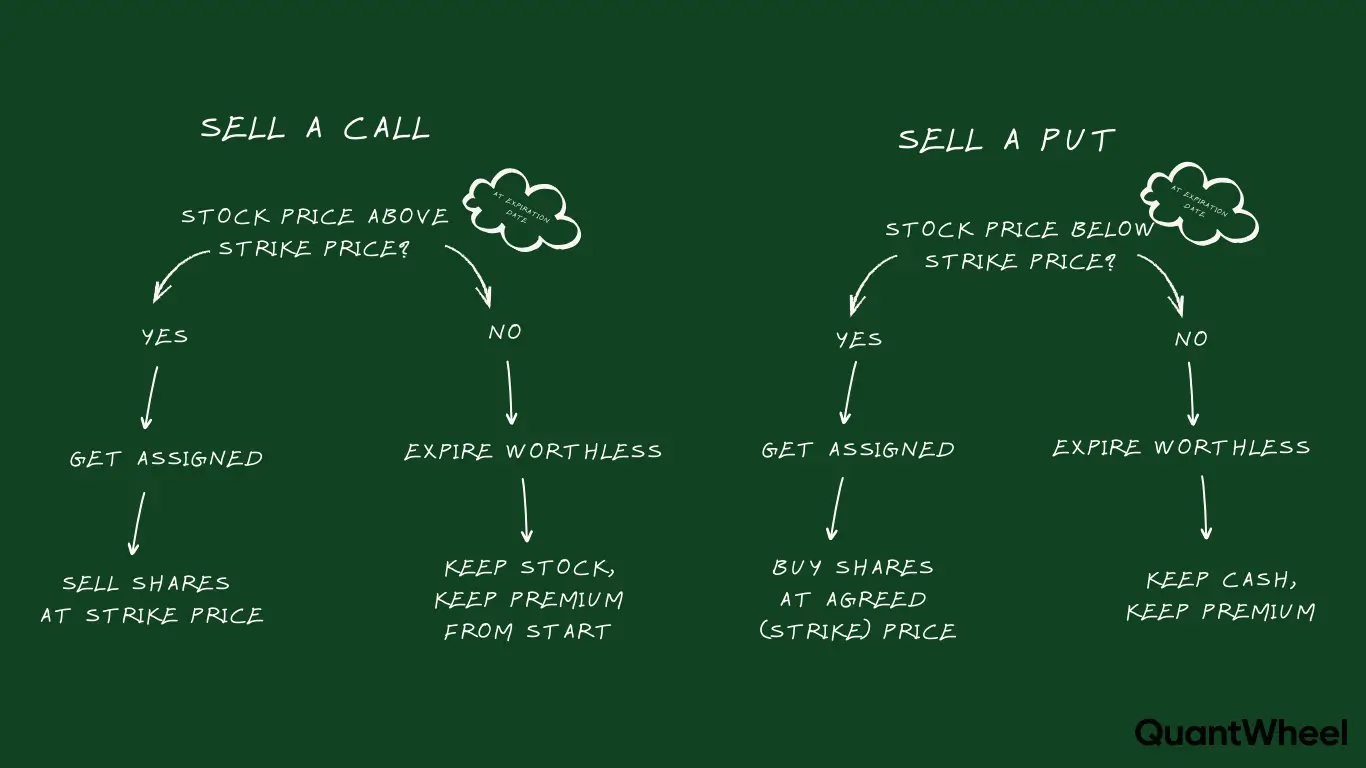
Assignment is what happens to option sellers when the buyer on the other side of their contract exercises.
When Assignment Happens
You get assigned when:
- Someone exercises their option - A buyer (not necessarily YOUR specific buyer) decided to exercise
- The OCC randomly selects sellers - Assignment is distributed randomly among sellers who have open contracts
- Your broker notifies you - Usually overnight after market close
Types of Assignment
End-of-Expiration Assignment (Most Common)
Your option expires in-the-money, gets automatically exercised by the buyer, and you get assigned. This is predictable and expected.
Example: You sold a $50 cash-secured put. At expiration, the stock is at $48. The buyer's option gets automatically exercised, and you're assigned 100 shares at $50 per share. Your account now shows 100 shares at $50, minus the $2 premium you collected (real cost basis: $48).
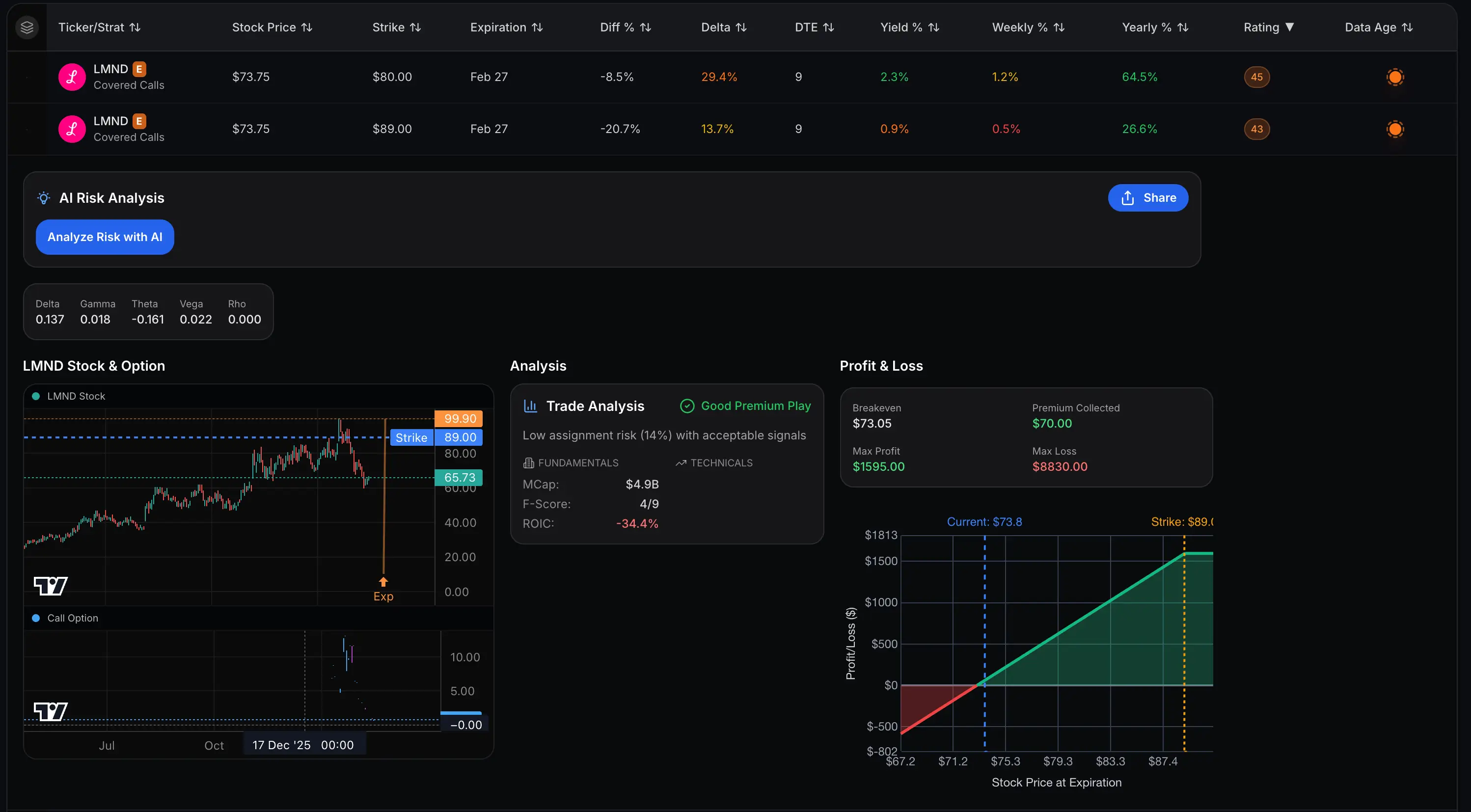
Here's an example trade with a low chance of assignment:
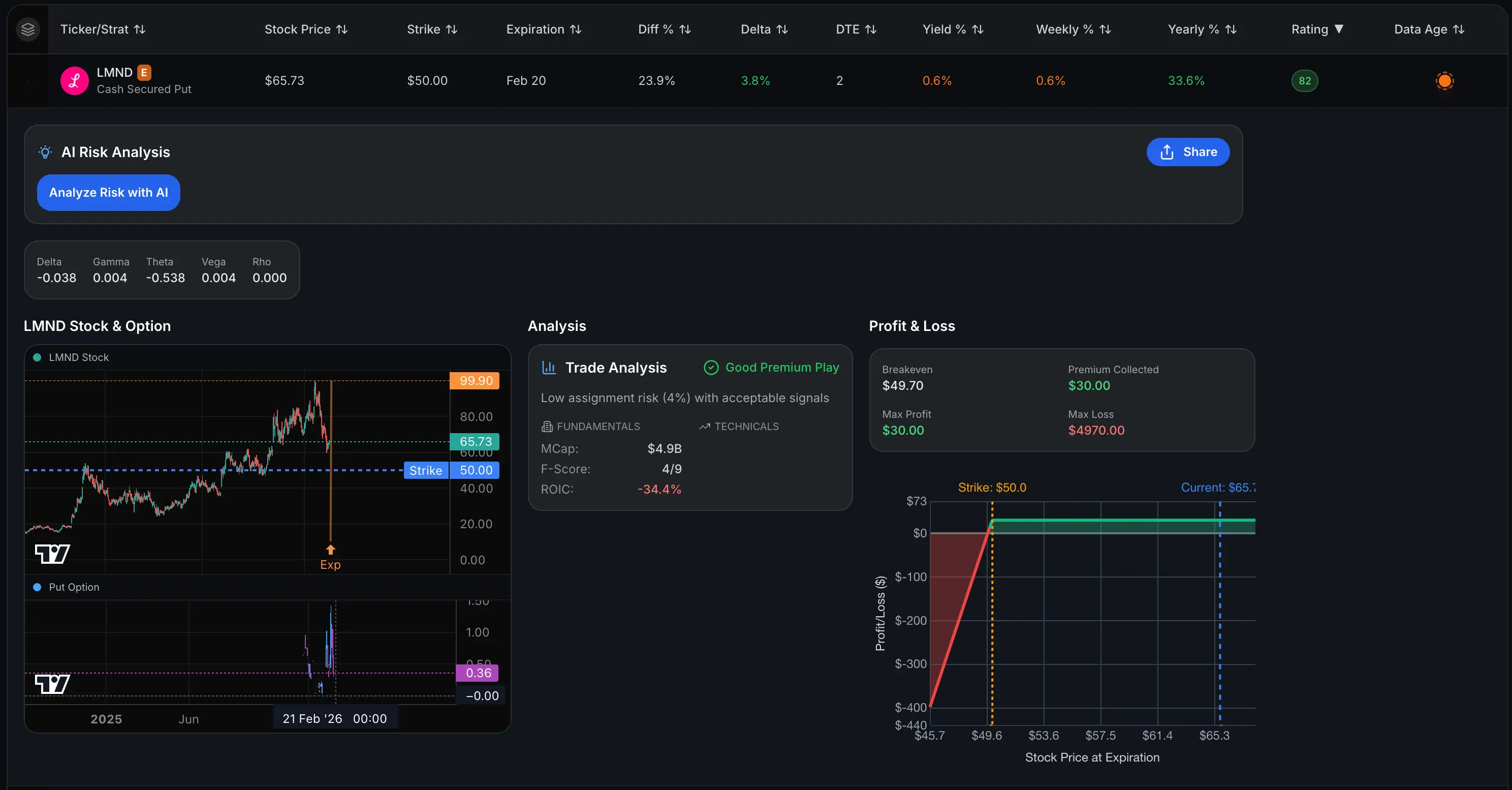
This trade is interesting because a stock needs to fall 23% in order for you to get assigned which is highly unlikely. Also, according to option greeks which are embedded into the QuantWheels rating system among other useful indications, the chance of assignments stands at just 4% - that's a crazy deal! Find trades like this inside QuantWheel →
Early Assignment (Less Predictable)
Assignment happens before expiration. This is less common but occurs in specific situations:
- Calls before ex-dividend date: High probability if your short call is ITM and a dividend is coming
- Deep ITM options: The deeper in-the-money, the higher the early assignment risk
- No time value left: If there's no extrinsic value remaining, buyers might exercise early
Pin Risk Assignment (Expiration Day)
This happens when the stock price is very close to your strike price at expiration. You might not know whether you'll be assigned until the next morning because:
- The stock might move after hours
- Some buyers might exercise even slightly OTM options
- Assignment becomes uncertain until settlement
Exercise vs Assignment: Key Differences Breakdown
| Aspect | Exercise | Assignment |
|---|---|---|
| Who | Option buyer | Option seller |
| Control | Voluntary (buyer's choice) | Involuntary (obligation) |
| When | Buyer decides timing | When buyer exercises |
| Notification | Buyer initiates with broker | Broker notifies you after it happens |
| Money Flow | Buyer pays strike price (calls) or receives strike price (puts) | Seller receives strike price (puts) or pays strike price (calls) |
| Can You Prevent It? | Yes - buyer can choose not to exercise | No - only by closing the position before assignment |
How Exercise and Assignment Work in the Wheel Strategy
The wheel strategy specifically involves selling options, which means you're on the assignment side of these transactions.
Selling Cash-Secured Puts (Step 1 of the Wheel)
What you do: Sell a put option, collect premium What you're obligated to do: Buy 100 shares at the strike price if assigned When assignment happens: If the stock drops below your strike at expiration
Example Wheel Put Scenario:
You sell a $50 put on XYZ for $2 premium ($200 total).
Scenario A - No Assignment:
- Stock stays above $50 at expiration
- Option expires worthless
- You keep the $200 premium
- Repeat with another put
Scenario B - Assignment:
- Stock drops to $47 at expiration
- Buyer exercises (automatic at expiration)
- You're assigned: You buy 100 shares at $50 ($5,000 cost)
- Your real cost basis: $48 ($50 strike - $200 premium collected)
- You now move to step 2: Selling covered calls
Notice: the example above might not seem enticing if you get assigned based on your cost basis, but collecting 30$ in 2 days is a great deal.
Next step (if you get assigned) is to find a good Covered Call trade.
Selling Covered Calls (Step 2 of the Wheel)
What you do: Own 100 shares, sell a call option, collect premium What you're obligated to do: Sell your 100 shares at the strike price if assigned When assignment happens: If the stock rises above your strike at expiration
Example Wheel Call Scenario:
You own 100 shares (cost basis $48, because you collected $200 in premium from a CSP trade) and sell a $52 call for $1.50 premium ($150).
Scenario A - No Assignment:
- Stock stays below $52 at expiration
- Option expires worthless
- You keep the $150 premium
- You still own shares, sell another call
Scenario B - Assignment:
- Stock rises to $55 at expiration
- Buyer exercises (automatic at expiration)
- You're assigned: You sell 100 shares at $52 ($5,200 received)
- Your total profit: ($52 - $48) × 100 = $400 + $150 premium = $550
- Wheel completes, start over with selling puts
Notice: the example above gives you a chance to act based on what you want to do with the stock. Want to get assigned and make a quick "flip"? You pick the first trade QuantWheel has found. Want to avoid assigned and keep collecting premiums on this stock? You pick the second trade.
Why Assignment Is Part of the Plan
In the wheel strategy, assignment isn't something to fear or avoid - it's literally how the strategy progresses:
- Put assignment gets you into stock ownership (often at a discount because of premium collected)
- Call assignment gets you out of stock ownership (often at a profit plus premium collected)
Many wheel traders actually want assignment because it means the strategy is working as designed.
Cost Basis Calculations After Assignment
Here's where things get complicated - and where most traders make mistakes.
The Cost Basis Problem
When you get assigned on a put, your broker will show your stock purchase price as the strike price. But your real cost basis needs to account for the premium you collected when you sold that put.
What your broker shows: Cost basis = Strike price What your real cost basis is: Cost basis = Strike price - Premium collected
Real-World Example
You sold a $100 put for $3 premium and got assigned.
Broker shows:
- Purchased 100 shares at $100
- Cost basis: $100 per share
Reality:
- You collected $300 premium first
- Then spent $10,000 to buy shares
- Net cost: $9,700 for 100 shares
- Real cost basis: $97 per share
This $3 difference matters for:
- Position management: Knowing your true breakeven point
- Exit planning: Understanding real profit/loss on covered calls
- Tax reporting: Reporting correct cost basis to the IRS
Tracking Cost Basis Through Full Wheel Cycles
Let's walk through a complete wheel cycle and track the real cost basis:
Starting Point: Cash account with $10,000
Step 1: Sell cash-secured put
- Sell XYZ $100 put for $3 premium
- Collect $300
- Account: $10,300 cash
Step 2: Assignment on put
- Stock drops to $95
- Assigned: Buy 100 shares at $100
- Account: 100 shares + $300 cash
- Real cost basis: $97 per share (not $100)
Step 3: Sell covered call
- Sell XYZ $105 call for $2 premium
- Collect $200
- Account: 100 shares + $500 cash
- Adjusted cost basis: Now effectively $95 per share ($97 - $2)
Step 4: Assignment on call
- Stock rises to $107
- Assigned: Sell 100 shares at $105
- Receive $10,500
- Account: $11,000 cash
Total profit: $1,000 (10% return)
- Premium from put: $300
- Premium from call: $200
- Capital gain: $500 (sold at $105, bought at effectively $97 after first premium)
Why Manual Tracking Breaks Down
If you're running 5-10 wheel positions simultaneously, tracking cost basis manually becomes problematic:
- Multiple assignments at different times
- Rolling positions (collecting more premium, adjusting strikes)
- Dividends received while holding shares
- Need to track for tax purposes across multiple positions
This is exactly where most traders struggle - and why software like QuantWheel exists. QuantWheel automatically adjusts your cost basis when assignments happen, tracks premium collected through complete wheel cycles, and provides tax-ready reporting.
$1 for 7 days • Cancel anytime • 14-day money-back guarantee
How to Avoid Unwanted Assignment
While assignment is part of the wheel strategy, there are times you might want to avoid it. Here's how:
Close the Position Before Expiration
The only guaranteed way to avoid assignment is to buy back (close) your short option before expiration.
When to consider closing:
- Stock has moved significantly against you
- Early assignment risk is high (calls before ex-dividend)
- You don't want to own/sell the stock anymore
- The option has lost most of its value (take profit early)
How it works:
- You sold a $50 put for $2
- Stock drops to $48, option is now worth $2.50
- Buy it back for $2.50 to close
- Loss: $50 ($2.50 paid - $2.00 collected)
- Result: No assignment, position closed
Roll the Position
Rolling means closing your current option and simultaneously opening a new one, typically at a different strike or expiration.
Common rolls to avoid assignment:
- Roll out: Same strike, later expiration (buy more time)
- Roll down: Lower strike, same or later expiration (reduce assignment risk)
- Roll out and down: Lower strike AND later expiration (maximum flexibility)
Example roll:
- Sold $50 put expiring this week, stock at $48
- Close the $50 put (buy it back)
- Sell a $48 put expiring next week
- Collect additional premium and avoid immediate assignment
If you're struggling with rolling, QuantWheel can help you with that. Here's an example below:
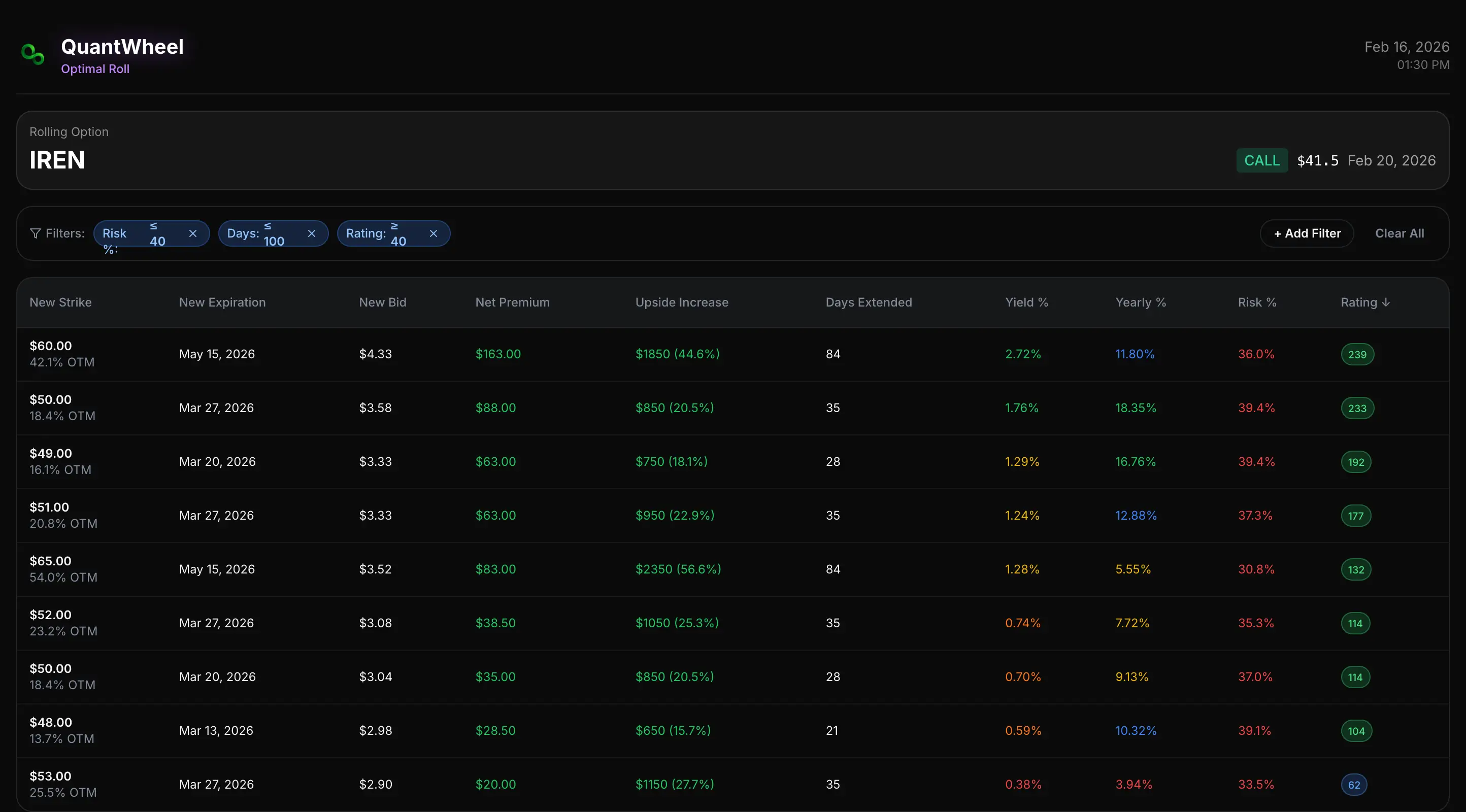
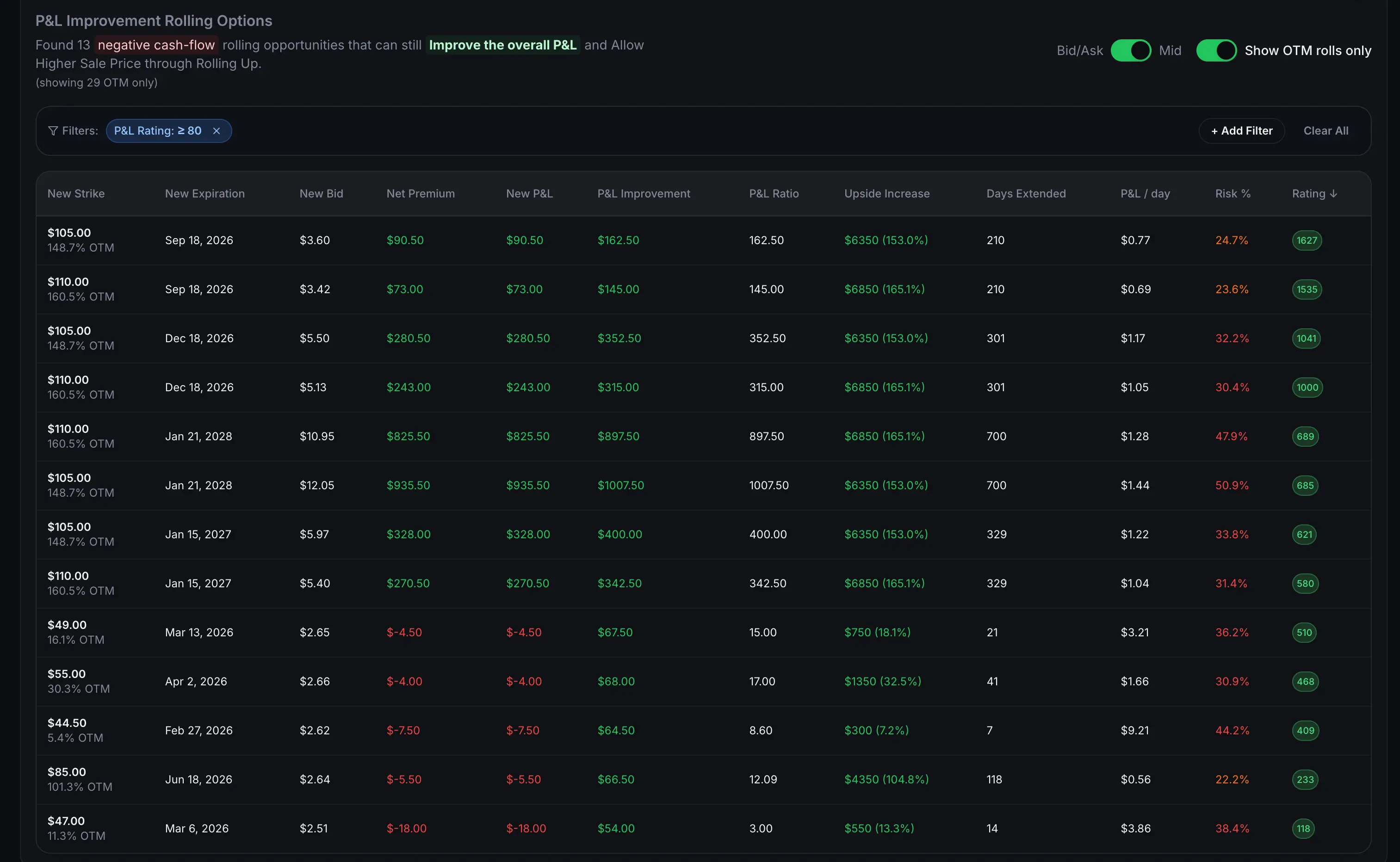
Having a view of your rolling options helps you make better options trade rolling decisions. Avoid assignment with QuantWheel →
Monitor High-Risk Situations
Calls before ex-dividend date
If you have short calls that are in-the-money and a dividend is coming, early assignment probability is HIGH. The buyer might exercise to capture the dividend.
Deep in-the-money options
Options that are significantly ITM have very little time value left. Buyers might exercise early, especially on puts. If your short option is $5+ in-the-money with little time value, consider the assignment risk.
Expiration day pin risk
If your option is close to at-the-money on expiration day, assignment becomes unpredictable. The stock might move after hours, or buyers might exercise even slightly OTM options. Consider closing the position to eliminate uncertainty.
What to Do When You Get Assigned
Assignment happened. Now what?
Step 1: Verify the Assignment
Check your broker account:
- Puts: You should see 100 shares added to your account and cash reduced by (strike price × 100)
- Calls: You should see 100 shares removed and cash increased by (strike price × 100)
Review the assignment notice from your broker (usually sent via email and available in your account).
Step 2: Calculate Your Real Cost Basis
For put assignment: Real cost basis = Strike price - Total premium collected on that put
For call assignment: Real profit/loss = (Strike price - Your original cost basis) × 100 + Total premium collected on that call
Keep detailed records. Your broker's cost basis calculation might not include the options premium.
Step 3: Decide Your Next Move
If assigned on a put (you now own shares):
Option A: Continue the wheel
- Sell a covered call above your cost basis
- Collect more premium
- Either get assigned (sell at profit) or keep shares and sell another call
Option B: Sell the shares immediately
- Exit the position at current market price
- Realize profit or loss
- Start a new wheel position elsewhere
If assigned on a call (shares were sold):
Option A: Start the wheel again
- Sell another cash-secured put
- Get back into wheel cycle
Option B: Move to different stock
- Take profit and redeploy capital
- Start wheel on better opportunity
Step 4: Update Your Tracking
Record everything for tax purposes:
- Assignment date
- Strike price
- Shares received/delivered
- Premium collected
- Adjusted cost basis
If you're running multiple wheel positions, this administrative work multiplies quickly. QuantWheel handles this automatically, tracking assignments and adjusting cost basis in real-time.
Common Exercise and Assignment Mistakes
Mistake 1: Thinking You Can Refuse Assignment
The misconception: "I'll just tell my broker I don't want to be assigned."
The reality: Assignment is an obligation. Once you sell an option, you cannot refuse assignment if the buyer exercises. Your only option is to close the position before assignment happens.
Mistake 2: Not Having Cash Available for Put Assignment
The mistake: Selling cash-secured puts without sufficient cash to buy the shares if assigned.
The consequence: Margin call, forced liquidation of other positions, or your broker preventing the trade.
The solution: Ensure you have 100% of the capital required (strike price × 100 shares) available before selling puts. This is why they're called "cash-secured" puts.
Mistake 3: Forgetting About Dividend Ex-Dates
The mistake: Holding short calls through ex-dividend dates without considering early assignment risk.
The consequence: Unexpected assignment the day before ex-dividend, and you owe the dividend to the buyer.
The solution: If your short call is in-the-money approaching an ex-dividend date, close or roll the position. Early assignment probability is very high.
Mistake 4: Ignoring Cost Basis After Assignment
The mistake: Using the broker's cost basis (strike price) instead of the real cost basis (strike minus premium).
The consequence:
- Selling covered calls at strikes below your real breakeven
- Incorrect tax reporting
- Poor position management decisions
The solution: Track premium collected separately and adjust your cost basis manually, or use software that does this automatically.
Mistake 5: Panicking at Assignment
The mistake: Treating assignment as a problem or failure, leading to emotional decisions.
The reality: In the wheel strategy, assignment is part of the plan. Put assignment gets you into shares (often at a discount), and call assignment closes the cycle at a profit.
The solution: Understand that assignment is normal and expected. Have a plan for what to do after assignment before you enter the trade.
Exercise vs Assignment: Tax Implications
Understanding exercise and assignment becomes especially important at tax time.
How Exercise is Taxed (Option Buyers)
If you exercise a call:
- Your cost basis in the stock = Strike price + Premium you paid
- No taxable event until you sell the stock
- Holding period starts on exercise date
If you exercise a put:
- You sell stock at the strike price
- Capital gain/loss calculated based on your original stock cost basis
- Premium paid for the put reduces your sale proceeds
How Assignment is Taxed (Option Sellers)
If you're assigned on a short put:
- Your cost basis in the stock = Strike price - Premium you collected
- No taxable event yet (option premium already taxed when received)
- Holding period starts on assignment date
- Track this carefully for future sale
If you're assigned on a short call:
- You sold stock at the strike price
- Capital gain/loss = (Strike price - Original cost basis) × 100 shares
- Premium collected on the call is added to sale proceeds
- Short-term or long-term depends on how long you held the shares
Wash Sale Considerations
If you're assigned on a put, immediately sell the shares at a loss, and then sell another put on the same stock within 30 days, you might trigger wash sale rules.
Example:
- Assigned on $100 put, stock now at $95
- Sell shares immediately for $5 loss per share ($500 total)
- Sell another $95 put within 30 days
- Get assigned again
Result: Wash sale rule applies - the $500 loss is disallowed and added to your new cost basis.
Tax Reporting for Wheel Traders
You need to report:
- Premium received from selling options (short-term income)
- Capital gains/losses from assigned stock sales
- Adjusted cost basis that includes premium collected
This gets complex with multiple wheel positions. Professional tracking software or working with a tax professional familiar with options is recommended.
Tools for Tracking Exercise and Assignment
Broker Tools (Basic)
Most brokers provide:
- Assignment notifications (email, app)
- Position history showing assignments
- Basic cost basis tracking (often incomplete)
Limitations:
- Don't automatically adjust cost basis for premium collected
- Hard to see full wheel cycle performance
- Limited portfolio-level analysis
Spreadsheets (Manual)
Many traders start with Excel or Google Sheets.
Pros:
- Free and customizable
- You control all calculations
Cons:
- Time-consuming to maintain
- Error-prone with multiple positions
- Difficult to track cost basis through complete cycles
- No automatic data feeds
Specialized Software
Software like QuantWheel is built specifically for wheel strategy traders.
What they handle automatically:
- Cost basis adjustment on assignment
- Tracking premium collected through complete cycles
- Position management across multiple wheel trades
- Tax-ready reporting
- Real-time assignment notifications
- Roll suggestions and analysis
For traders running 10+ wheel positions, specialized software eliminates the spreadsheet nightmare and ensures accurate tracking.
$1 for 7 days • Cancel anytime • 14-day money-back guarantee
Frequently Misunderstood Scenarios
"Can I be assigned before expiration on an out-of-the-money option?"
Technically yes, but it's extremely rare and would be irrational for the buyer. Early assignment almost always happens only on in-the-money options, and typically only in specific situations (dividends, deep ITM). If your option is out-of-the-money, early assignment probability is essentially zero.
"If I'm assigned, can I return the shares?"
No. Assignment is final and irreversible. Once you're assigned, you own those shares (or they've been sold from your account). Your options are to keep the shares, sell them, or sell calls against them. You cannot "undo" an assignment.
"Does assignment cost me extra fees?"
Most brokers charge an assignment fee, typically $5-$20 per assignment. Some brokers include this in their commission structure, others charge it separately. Check your broker's fee schedule. This is a small cost relative to the premium collected, but it does reduce your net profit slightly.
"Can I be partially assigned (fewer than 100 shares)?"
No. Options contracts are for 100 shares. Assignment always involves exactly 100 shares per contract. If you sold 3 contracts, you could be assigned on 0, 1, 2, or all 3 contracts (0, 100, 200, or 300 shares), but never a partial amount like 50 shares.
"Why was I assigned when my option was barely in-the-money?"
Automatic exercise at expiration happens if the option is $0.01 or more in-the-money. Even if your $50 put expires with the stock at $49.99, it will be automatically exercised and you'll be assigned. The OCC doesn't consider "how far" in-the-money - just whether it's ITM at all.
Key Takeaways
Exercise is what option buyers do - they have the right to buy (calls) or sell (puts) stock at the strike price. It's voluntary and controlled by the buyer.
Assignment is what happens to option sellers - they have the obligation to sell (on calls) or buy (on puts) stock at the strike price. It's involuntary and happens when buyers exercise.
In the wheel strategy, assignment is part of the plan:
- Put assignment gets you into shares
- Call assignment completes the cycle
Cost basis tracking is critical after assignment because your real cost basis includes the premium you collected, but your broker typically doesn't calculate this automatically.
You can avoid assignment by closing or rolling positions before expiration, but in the wheel strategy, you often want assignment to progress the strategy.
Track everything meticulously for tax purposes and position management, or use specialized software that automates the tracking.
Understanding exercise vs assignment transforms you from a confused options trader into someone who knows exactly what's happening with every position. This knowledge is especially valuable when running wheel strategies, where assignment is a regular occurrence that moves your trades forward.
$1 for 7 days • Cancel anytime • 14-day money-back guarantee
Risk Disclosure
Options trading involves substantial risk and is not suitable for all investors. Past performance does not guarantee future results. This content is for educational purposes only and should not be considered investment advice. Always do your own research and consider consulting with a financial advisor before making investment decisions.
The examples used in this article are for educational purposes only and are not recommendations to buy or sell any security. All investment decisions should be based on your own analysis and risk tolerance.