
Getting assigned on a covered call can feel nerve-wracking the first time it happens. You check your account Monday morning and suddenly your shares are gone. But here's the thing: assignment isn't something that went wrong - it's actually the natural conclusion of a successful covered call trade.
Start your free trial of QuantWheel to automatically track your covered call positions and get notified before potential assignments.
$1 for 7 days • Cancel anytime • 14-day money-back guarantee
If you're selling covered calls as part of the wheel strategy or just to generate income from stocks you own, understanding what happens during assignment is crucial for managing your positions confidently and calculating your actual returns.
TLDR: What Happens When You Get Assigned on a Covered Call
Quick Answer: Assignment means your 100 shares automatically get sold at the strike price you agreed to when selling the call. You keep all the premium collected upfront, plus any profit between your purchase price and the strike price. Your maximum profit was locked in when you sold the call.
Simple Example:
- You bought 100 shares of XYZ at $48
- You sold a $50 strike covered call for $2 premium (collected $200)
- Stock rises to $55 by expiration
- You get assigned: shares sold at $50 strike
- Your profit: ($50 - $48) + $2 premium = $4 per share = $400 total
- You miss the move from $50 to $55, but you achieved your maximum profit
The assignment process is automatic and takes 1-2 business days to complete. While you miss gains above the strike price, you successfully captured the premium and stock appreciation up to your target, which was your plan from the start.
What Does "Getting Assigned" Actually Mean?
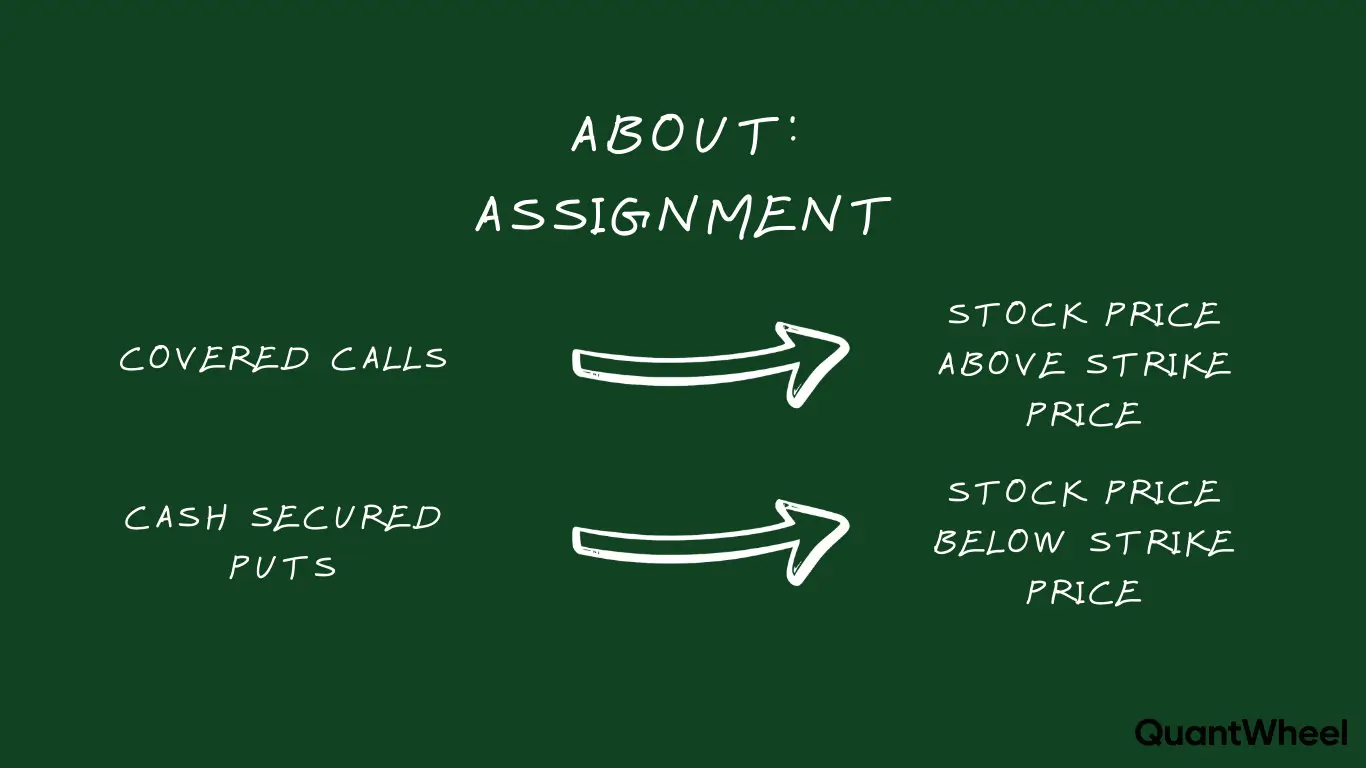
Assignment is the technical term for when an option seller must fulfill their obligation. When you sell a covered call, you're giving someone else the right (but not obligation) to buy your 100 shares at the strike price any time before expiration.
Here's what happens mechanically:
- The call buyer exercises their right - They decide to buy shares at the strike price
- Your broker receives the exercise notice - Usually after market close
- Your shares are automatically sold - At exactly the strike price
- Cash appears in your account - Strike price × 100 shares
- The option disappears - Both the call and the shares are gone
You don't do anything during this process. Your brokerage handles everything automatically overnight. Most traders find out they were assigned by checking their account the next morning and seeing shares gone, cash deposited.
Important: Assignment is not the same as your shares being "taken away." You voluntarily agreed to sell them at the strike price when you sold the call. You collected premium for that agreement, and now you're fulfilling it.
When Does Assignment Happen on Covered Calls?
Assignment at Expiration (Most Common)
The vast majority of covered call assignments happen on expiration Friday if the stock closes above the strike price. Here's the timeline:
- 4:00 PM ET Friday - Market closes
- 5:30 PM ET Friday - Exercise deadline for option holders
- Friday night - Assignment notices distributed
- Saturday-Sunday - Processing occurs
- Monday morning - Cash and shares settled in accounts
If your call is even $0.01 in-the-money at 4:00 PM Friday close, assume you'll be assigned. Option holders usually exercise all ITM options automatically.
Early Assignment (Less Common)
Early assignment can happen before expiration, though it's relatively rare for covered calls. Common triggers include:
Dividend Capture: The most common reason for early assignment. If your stock pays a dividend and your call is in-the-money, the buyer might exercise early to collect the dividend payment.
Example: XYZ pays a $0.50 dividend on Wednesday. Your $50 call is trading at $52 on Tuesday. The buyer might exercise Tuesday night to own shares by Wednesday and capture the dividend.
Deep In-The-Money Calls: If your covered call is significantly ITM with little time value remaining, buyers occasionally exercise early. If a $50 call is trading for $10.05 when the stock is at $60 (only $0.05 time value), early exercise becomes more likely.
Around Earnings: Some option holders exercise calls early ahead of earnings announcements, though this is less common.
How to Calculate Your Profit After Assignment
Many traders calculate covered call profits incorrectly because they forget to include both components. Here's the complete calculation:
The Two-Part Profit Formula
Total Profit = Stock Profit + Option Premium
Component 1: Stock Profit
- Strike Price - Your Cost Basis = Stock Gain per share
Component 2: Option Premium
- Premium Received (minus commissions) = Option Income
Example Calculation:
You bought 100 shares of AAPL at $175, then sold a $180 call for $3.50 premium.
AAPL rises to $190 by expiration. You get assigned.
Stock profit:
- ($180 strike - $175 cost basis) = $5 per share
- $5 × 100 shares = $500
Option premium kept:
- $3.50 × 100 = $350
Total profit:
- $500 + $350 = $850
- Return: $850 / $17,500 investment = 4.86%
What about the move to $190? You miss the gain from $180 to $190 (the additional $10 per share). This is the opportunity cost of selling the call, but it doesn't reduce your actual profit - you still made $850.
QuantWheel automatically calculates your breakeven, premium collected, max profit and max loss for every trade. Here's an example trade:
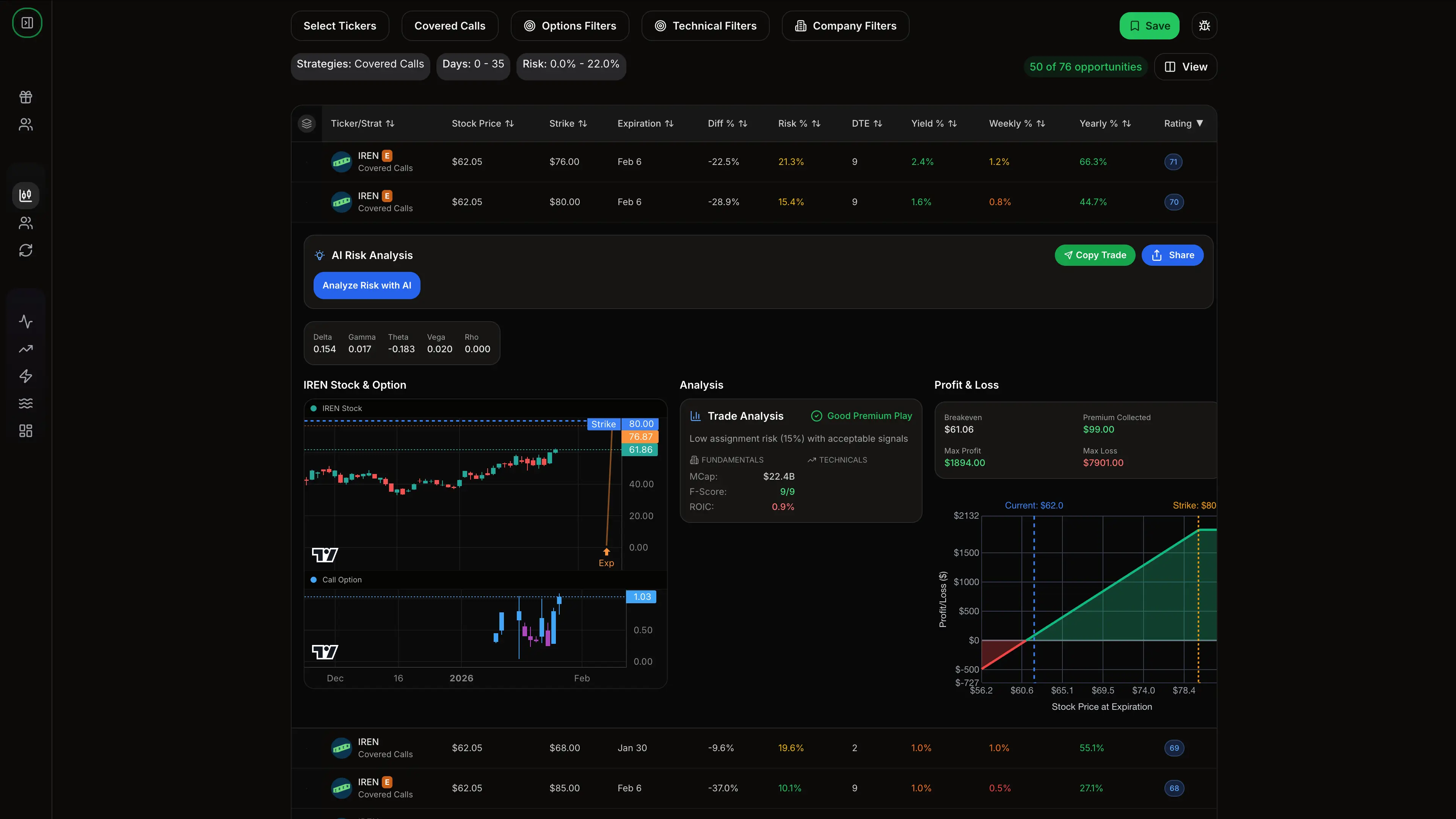
Find trades like this inside QuantWheel →
The Cost Basis Confusion
Here's where most traders get tripped up: your broker shows your original cost basis ($175 in the example above), not your effective cost basis after collecting premium.
Broker cost basis: $175 per share Your real cost basis: $175 - $3.50 premium = $171.50 per share Real profit: $180 strike - $171.50 real basis = $8.50 per share
This matters for understanding your true returns and tracking performance accurately. It's especially important if you're running the wheel strategy through multiple cycles, where cost basis tracking becomes complex quickly.
This is exactly where most traders' manual spreadsheets break down. After managing 10+ covered call positions through assignments, manually tracking adjusted cost basis becomes error-prone. QuantWheel automatically adjusts your cost basis when you get assigned, showing your real breakeven and actual profit without manual calculations.
What Happens to Your Cost Basis After Assignment?
For tax purposes, here's how covered call assignment affects your cost basis:
Tax Treatment
Stock Sale:
- You sold shares at the strike price
- Capital gain = Strike price - Original purchase price
- Holding period determines short-term vs long-term treatment
Premium:
- Treated as short-term capital gain
- Added to proceeds from stock sale for tax calculation
Example Tax Calculation:
- Bought 100 shares at $50 on January 15, 2024
- Sold May expiration $55 call for $2 premium on April 1, 2024
- Assigned on May 17, 2024
Tax reporting:
- Stock sale: Proceeds of $5,500 (100 × $55 strike)
- Cost basis: $5,000 (100 × $50)
- Stock gain: $500
- Premium income: $200
- Total gain: $700
- Treatment: Short-term (held less than 1 year)
The Record-Keeping Challenge
Tracking cost basis through assignments becomes complicated when you're:
- Running multiple covered call positions
- Rolling calls to avoid assignment
- Managing wheel strategy (CSP → assignment → CC → assignment)
- Dealing with adjusted cost basis from multiple premiums
Most brokers don't automatically adjust your cost basis for options premium collected. They show the stock purchase price as the cost basis, which gives you an incomplete picture of your real breakeven and profit.
What To Do After Getting Assigned
Once assigned, you have several options depending on your strategy:
Option 1: Take Your Profit and Move On
The simplest approach: accept the profit, let the cash sit in your account, and look for the next opportunity.
Best for:
- You've hit your profit target
- You're no longer bullish on this stock
- You want to deploy capital elsewhere
- You're satisfied with the return
This is a completely valid outcome. You entered the trade with a maximum profit target (strike price + premium), and you achieved it.
Option 2: Immediately Repurchase the Stock (If Still Bullish)
If you remain bullish on the underlying stock, you can buy back shares at the current market price.
Example:
- Assigned at $50 strike
- Stock now trading at $52
- Buy back 100 shares at $52
Consideration: You're paying $2 per share above your assignment price, effectively reducing your covered call profit. Only do this if you believe the stock will continue rising enough to justify the new, higher cost basis.
Option 3: Wait to Sell Cash-Secured Put (Wheel Strategy)
If you're running the wheel strategy, getting assigned on a covered call completes one full cycle. Your next step is typically:
- Let the cash sit in your account
- Look for a high-IV opportunity to sell cash-secured puts
- Potentially re-enter the same stock at a lower strike
- Or move to a different underlying entirely
This systematic approach treats assignment as the natural progression of the strategy rather than an ending point.
Option 4: Immediately Sell a New Cash-Secured Put on the Same Stock
If you want to get back into this specific stock, immediately sell a put at a strike below the current price.
Example:
- Assigned on $50 covered call, stock now at $52
- Sell $49 strike cash-secured put for $1.50 premium
- If assigned: repurchase shares at $49 (lower than $50)
- If expires worthless: keep $150 premium, repeat
This works well if you believe the stock will pull back or consolidate, letting you re-enter at a better price.
Can You Avoid Assignment on a Covered Call?
Yes, though it involves additional trading decisions and costs.
Method 1: Buy to Close Before Expiration
Close your covered call position by buying back the option at the current market price.
When this makes sense:
- Stock rallies significantly and you want to keep shares
- You expect continued upside and the buyback cost is justified
- You prefer to keep the shares for long-term holding
Example:
- Sold $50 call for $2 premium when stock was at $48
- Stock rallies to $55, call now worth $5.50
- Buy back call for $5.50
- Net result: Lost $3.50 ($5.50 paid - $2.00 collected)
- But you keep shares now worth $55
Cost analysis: You lose money on the option trade itself but gain by keeping shares that appreciated. Only worth it if you expect additional upside beyond the buyback cost.
Method 2: Roll the Call to Higher Strike or Later Expiration
Rolling means simultaneously buying back your current call and selling a new call with different terms.
Rolling Up (Higher Strike):
- Buy back current $50 call
- Sell new $55 call (same expiration)
- Locks in more stock profit if assigned
- Usually costs money (debit roll)
Rolling Out (Later Expiration):
- Buy back current May $50 call
- Sell new June $50 call (same strike)
- Gives more time for stock to pull back
- Usually collects additional premium (credit roll)
Rolling Up and Out:
- Buy back current May $50 call
- Sell new June $55 call
- Higher strike + more time
- Might be neutral or small credit
Rolling makes sense when you want to stay in the position but need to adjust to new market conditions. However, each roll involves transaction costs and new risks.
Method 3: Don't Avoid It - Assignment Is The Plan
For many wheel strategy traders, assignment isn't something to avoid - it's the successful completion of the trade.
The mindset shift:
- You sold the call because you were willing to sell at that price
- Getting assigned means you hit your target
- The fact that the stock went higher doesn't mean you made a mistake
- You can't capture every dollar of every move
This perspective eliminates the emotional frustration many traders feel when they "miss out" on gains above the strike. You defined your profit target when you sold the call, and you achieved it.
Common Mistakes When Assigned on Covered Calls
Mistake 1: Feeling Like You Lost Money
The error: Getting upset that the stock rose above your strike price.
Reality: You made exactly the profit you signed up for when selling the call. The stock going higher doesn't mean your trade was bad - it means you successfully captured your target return.
Fix: Reframe assignment as "mission accomplished" rather than "opportunity lost."
Mistake 2: Immediately Buying Back at Higher Prices
The error: Getting assigned at $50, then immediately buying shares back at $53 because "you still like the stock."
Reality: You're now paying $3 more per share than you were just assigned at, reducing your overall profit significantly. You've essentially erased much of your covered call gain.
Fix: If you want back in, wait for a pullback or sell a cash-secured put to potentially re-enter at a better price.
Mistake 3: Not Tracking True Cost Basis
The error: Forgetting to subtract premium collected from your stock cost basis when calculating returns.
Reality: Your real cost basis is lower than your original stock purchase price once you factor in premium collected. Missing this adjustment understates your actual returns.
Fix: Always calculate: Effective Cost Basis = Original Cost Basis - Premium Collected. This is your true breakeven for performance tracking.
Mistake 4: Forgetting About Assignment Risk Early
The error: Selling calls right before ex-dividend dates without considering early assignment risk.
Reality: If your stock pays a dividend and your call is in-the-money, early assignment becomes likely as buyers exercise to capture the dividend.
Fix: Check dividend dates before selling calls. Either avoid selling ITM calls before ex-div, or accept early assignment as probable.
Mistake 5: Setting Strike Too Low
The error: Selling covered calls at strikes below your breakeven or purchase price.
Reality: If assigned, you'll realize a loss on the stock even though you collected premium. The premium might not offset the stock loss.
Fix: For most traders, sell calls at strikes above your cost basis to ensure assignment results in overall profit. Only sell below cost basis if the premium is large enough to offset the stock loss.
How Fees and Commissions Affect Assignment
Assignment comes with costs that reduce your net profit:
Assignment Fees
Most brokers charge an assignment fee when your option is exercised.
Typical costs:
- Schwab: $0
- Fidelity: $0
- E*TRADE: $0
- Interactive Brokers: $1 per contract
- tastyworks: $0
These fees are relatively small but should be factored into your profit calculations, especially if trading multiple contracts.
Stock Sale Commissions
When your shares are sold through assignment, you may pay a stock commission.
Most major brokers: $0 stock commissions (Schwab, Fidelity, E*TRADE, Robinhood, Webull)
Options Commissions (Opening Trade)
Don't forget the commission you paid when initially selling the covered call.
Typical costs per contract:
- Robinhood: $0
- Schwab: $0.65
- Fidelity: $0.65
- E*TRADE: $0.65
- tastyworks: $1.00 to open, $0 to close
Total Cost Example
Sold 1 covered call contract for $200 premium:
- Opening commission: $0.65
- Assignment fee: $0
- Stock sale commission: $0
- Net premium: $199.35
The impact is minimal on standard 1-contract trades but adds up with higher volume or multiple positions.
Covered Call Assignment and the Wheel Strategy
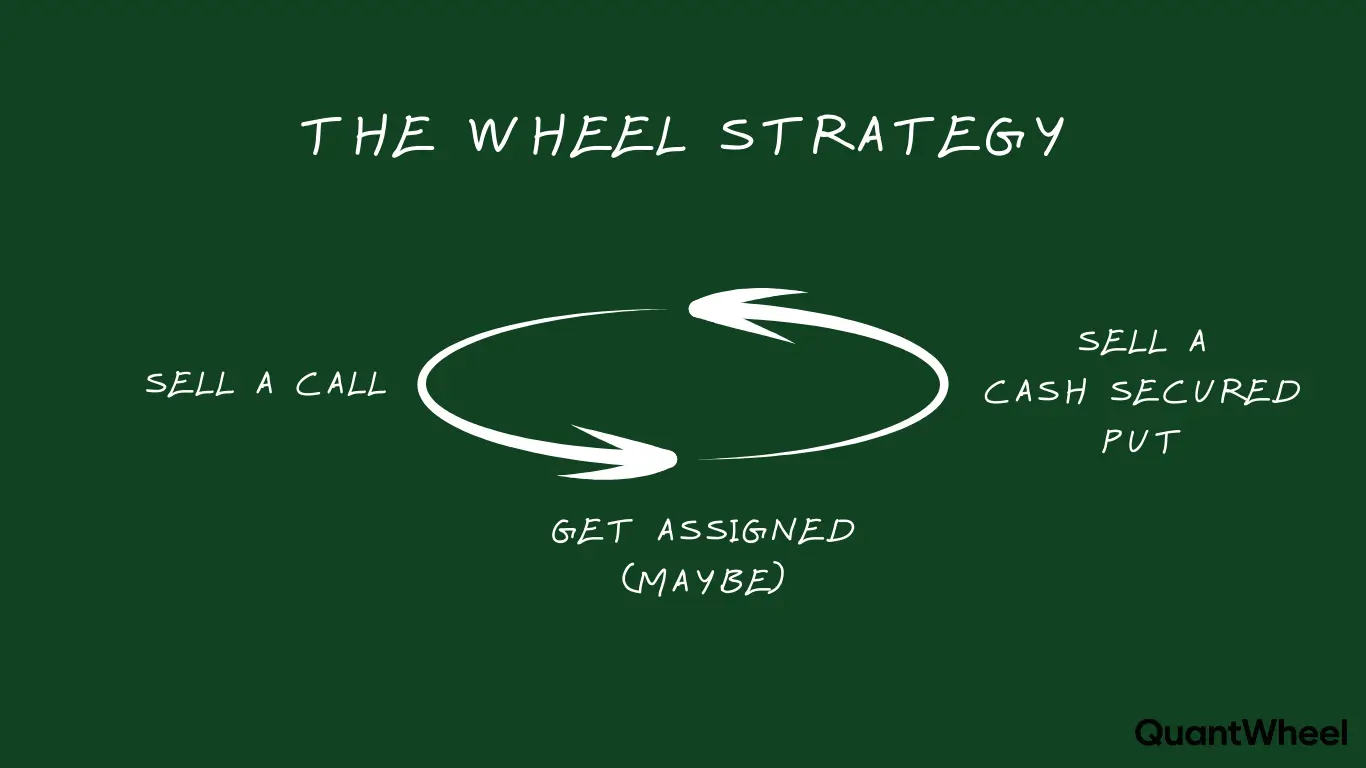
For wheel strategy traders, covered call assignment represents the successful completion of one full wheel cycle:
Complete Wheel Cycle:
- Sell cash-secured put → Collect premium
- Get assigned on put → Own shares at strike price
- Sell covered call → Collect premium
- Get assigned on call → Shares sold at strike price
- Repeat with new underlying → Back to cash
The Full Cycle Profit
When calculating wheel strategy returns, you must account for premium from BOTH the put and the call.
Example Full Cycle:
Step 1 - Sell Put:
- Sold $50 put for $2 premium
- Got assigned, bought shares at $50
- Real cost basis: $50 - $2 = $48
Step 2 - Sell Call:
- Sold $52 call for $2 premium
- Got assigned, sold shares at $52
- Stock profit: $52 - $48 real cost = $4
Total profit per share:
- Put premium: $2
- Call premium: $2
- Stock appreciation: $2 (from $50 to $52)
- Total: $6 per share on $50 capital deployed = 12% return
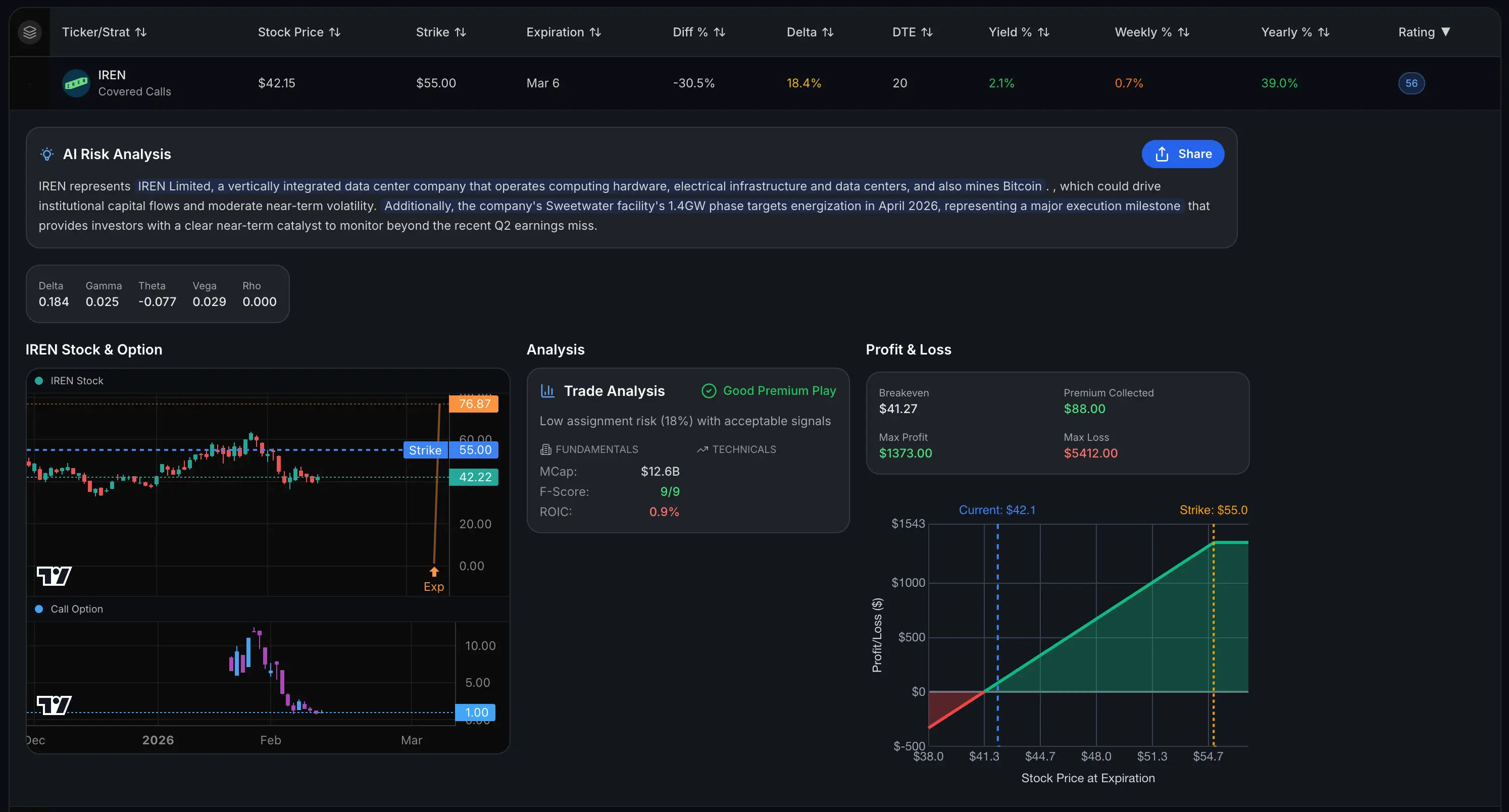
If you're looking to improve your trade picking process when selling options, QuantWheel can help you find the best trades according to your filters. It also ranks the best trades so that you can eliminate indecisiveness and save time. Here's a look inside QuantWheel:
Where Manual Tracking Breaks Down
After running several wheel cycles across multiple stocks, calculating your real cost basis becomes complex:
- SPY: Assigned on put at $450, collected $5, then $4 on call = $441 real basis
- AAPL: Rolled call twice, collected $3 + $2 + $4 = $9 total premium
- MSFT: Assigned on put, sold two calls = tracking multiple premiums
This is where QuantWheel's automatic cost basis tracking saves hours of manual spreadsheet updates. It tracks your entire wheel cycle from put assignment through call assignment, adjusting your real cost basis automatically as you collect premium.
$1 for 7 days • Cancel anytime • 14-day money-back guarantee
Tax Implications of Covered Call Assignment
Assignment triggers a taxable event, and understanding the tax treatment helps you plan better.
Capital Gains Treatment
Stock Sale: When assigned, you're selling shares. Capital gains treatment depends on how long you held the stock.
Short-term capital gain (held ≤ 1 year):
- Taxed as ordinary income
- Your marginal tax rate applies
Long-term capital gain (held > 1 year):
- Preferential tax rate (0%, 15%, or 20% depending on income)
- Significant tax savings vs short-term
The Holding Period Rule
Here's where it gets tricky: selling a covered call can affect your holding period for long-term capital gains treatment.
Qualified covered call: Doesn't affect holding period
- Call strike must be "not too far" out-of-the-money
- Must be >30 days to expiration when sold
- Stock must be held for specific period before selling call
Unqualified covered call: Suspends holding period
- Strikes that are too far OTM
- Selling calls too soon after buying shares
- Can prevent long-term capital gains treatment
Most at-the-money or slightly out-of-the-money covered calls qualify, but deep OTM calls or selling calls immediately after buying shares can create issues.
Premium Treatment
The premium collected from selling the call is treated as a short-term capital gain in the year you sold the call OR as additional proceeds from the stock sale if assigned.
If assigned: Premium typically gets added to your stock sale proceeds for a single combined gain calculation.
If not assigned: Premium is separate short-term capital gain.
Record Keeping Requirements
For tax filing, you need to track:
- Original stock purchase date and price
- Covered call sale date and premium received
- Assignment date
- Total proceeds (strike price + premium)
Most brokers provide this on Form 1099-B, but verifying their calculations against your records is important, especially for complex positions with multiple rolls or adjustments.
What's The Best Strike Price to Avoid Assignment?
If your goal is to avoid assignment and keep shares:
Sell Far Out-of-the-Money Calls
The further OTM your strike, the less likely the stock reaches it by expiration.
Trade-off: Far OTM calls pay less premium. You're trading income for lower assignment probability.
Example:
- Stock at $50
- $52 call (4% OTM): $1.50 premium, 60% chance of assignment
- $55 call (10% OTM): $0.50 premium, 20% chance of assignment
Sell Shorter-Dated Options
Less time = less opportunity for the stock to rally through your strike.
Trade-off: More frequent trading, higher transaction costs, more management required.
Example:
- 7-day options: Less premium, lower assignment probability
- 45-day options: More premium, higher assignment probability
Reality Check
If you're trying hard to avoid assignment, ask yourself: why did you sell the covered call?
The point of a covered call is to get paid to set a profit target. If you're very confident the stock will go much higher, selling a call might not be the right strategy. Consider just holding the shares.
Many traders sell covered calls "hoping" they won't get assigned so they can keep shares AND keep premium. This works sometimes, but eventually you get assigned, and then you're upset you "lost" the shares.
Better approach: sell calls at prices you're genuinely happy to sell at. Then assignment becomes a positive outcome, not a disappointment.
Assignment Notifications: What Your Broker Tells You
Different brokers handle assignment notifications differently:
Notification Methods
Email: Most common - assignment notification sent to your registered email App notification: Mobile alert that assignment occurred Account message center: Notice in your brokerage message inbox None: Some brokers only show the change in your positions without proactive notification
Timing of Notifications
Friday night (after market close): If assigned on expiration Friday, notification typically arrives between 8 PM - 11 PM Friday evening.
Saturday morning: Some brokers send assignment notices after processing completes overnight.
Monday morning: Your account reflects the completed assignment - shares gone, cash deposited.
What the Notification Says
Typical assignment notice includes:
- Contract details (ticker, strike, expiration)
- Number of contracts assigned
- Settlement details (shares removed, cash added)
- Settlement date
- Any fees charged
Example: "You have been assigned on 1 contract of AAPL May 17 2024 $180 Call. 100 shares of AAPL will be delivered at $180.00 per share. Settlement date: May 21, 2024."
Pro Tip: Check Friday Evening
If you have in-the-money calls expiring Friday, check your account Friday evening after 8 PM. Most assignments are processed by then, and you'll know your status before the weekend.
Start your free trial of QuantWheel to track your covered call positions and get real-time alerts before potential assignments.
Summary: Covered Call Assignment is Part of the Plan
Getting assigned on a covered call isn't a failure or mistake - it's the successful execution of your strategy. You collected premium for agreeing to sell shares at a specific price, and when that price is hit, you fulfill that agreement.
Key Takeaways:
✓ Assignment means shares automatically sold at strike price
✓ You keep all premium plus stock gains up to the strike
✓ Most assignments happen at expiration if ITM
✓ Your profit = (Strike - Cost Basis) + Premium Collected
✓ Tracking cost basis correctly is crucial for accurate returns
✓ Assignment completes one wheel cycle for wheel strategy traders
✓ You can avoid assignment by buying back or rolling, but it costs money
✓ Missing gains above the strike isn't a loss - you hit your target
The emotional challenge of assignment comes from watching a stock continue rising after your shares are called away. But remember: you can't capture every dollar of every move. You defined your target when you sold the call, you collected premium for that agreement, and you successfully reached your goal.
For traders running the wheel strategy or managing multiple covered call positions, assignment is just another data point in your systematic approach. The key is tracking your real returns accurately, maintaining discipline, and moving on to the next opportunity.
If you're managing multiple covered calls and finding cost basis tracking tedious, QuantWheel automatically adjusts your cost basis through assignments and rolls, showing your real breakeven and performance without manual calculations. Try it free for 14 days - no credit card required.
$1 for 7 days • Cancel anytime • 14-day money-back guarantee
Risk Disclosure
Options trading involves substantial risk and is not suitable for all investors. Past performance does not guarantee future results. This content is for educational purposes only and should not be considered investment advice. Always do your own research and consider consulting with a financial advisor before making investment decisions.
The examples used in this article are for educational purposes only and are not recommendations to buy or sell any security. All investment decisions should be based on your own analysis and risk tolerance.